
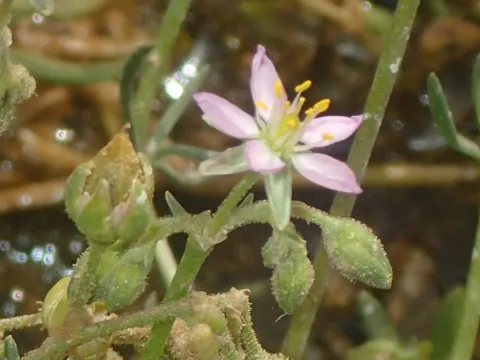
Spergula fallax
Spergula fallax
Spergula fallax is an annual herbaceous plant belonging to the Caryophyllaceae family, known primarily for its presence in arable lands.
What the section contains
Spergula fallax
Its life cycle starts with seed germination in the early spring, taking advantage of cool temperatures and available soil moisture.
The seeds possess strong dormancy mechanisms, allowing them to remain viable in the soil seed bank for extended periods of time.
Agronomic management focuses on preventing the plant from reaching the seeding stage, as it can produce a significant amount of progeny per individual.
Effective control strategies often involve mechanical cultivation of the field during the early growth stages of the primary crop.
The species is highly adaptable and can be found in various soil types, ranging from sandy soils to heavier loam conditions.
It favors well-lit, open areas where competition for sunlight is minimal, making it a common sight in fields with sparse crop stands.
Water availability is essential for its vegetative growth; however, it shows tolerance to occasional dry spells compared to other weeds.
Soil fertility management is crucial, as the plant can effectively utilize residual nitrogen and phosphorus intended for agricultural crops.
Crop rotation practices help to disturb its life cycle, especially when alternating between winter and summer crop cycles.
Spergula fallax exhibits remarkable resilience against typical plant pathogens, rarely suffering from fungal or bacterial infections.
It acts as a robust competitor in the field, utilizing space and nutrients rather than being affected by common field pests.
While insects do not significantly impact its population, the plant can serve as an alternative host for various agricultural pests.
The main threat posed by this species is the reduction of total crop yield through intense competition for limited site resources.
Chemical control with selective herbicides remains the primary method for managing this plant in intensive farming systems.