
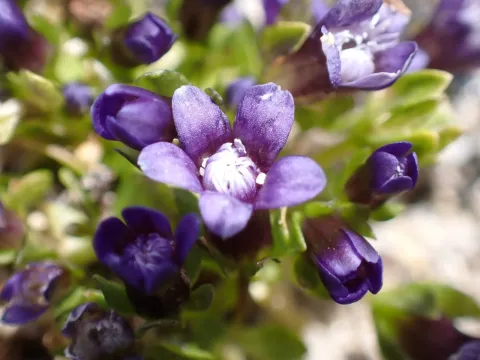
Dwarf gentian
Gentiana nana
Dwarf gentian (Gentiana nana) belongs to the Gentianaceae family, a group of plants well-known for their vibrant colors and adaptability to extreme environments. It is an annual species native to the high-altitude regions of Asia, primarily found in rocky, mountainous terrains.
What the section contains
Dwarf gentian
The plant is characterized by its small, compact growth habit and specialized physiological adaptations to cold, high-altitude climates. Its structure allows it to thrive in short growing seasons where other species would struggle.
In terms of climate requirements, the dwarf gentian demands cool ambient temperatures and high atmospheric humidity. It performs best in environments that mirror its natural alpine habitat, avoiding direct, harsh afternoon sunlight and intense heat.
The soil must be exceptionally well-draining, typically consisting of a mix of grit, rocky soil, and organic matter. Ensuring that moisture does not accumulate around the roots is essential for preventing physiological collapse and root decay.
While its primary use is aesthetic, the species holds significance in rock gardens and specialized alpine collections. Its small size and delicate appearance make it a prized specimen for horticulturists focused on mountain flora.
The most significant threats to the dwarf gentian are fungal diseases caused by excessive soil moisture and poor air circulation around the plants. Root rot is the primary cause of mortality under improper conditions.
Pests such as slugs and snails are highly detrimental to young seedlings. These organisms can quickly consume the delicate plant tissues, necessitating protective measures such as physical barriers or biological control.
Aphids can occasionally infest the foliage, particularly during damp weather conditions. While usually not fatal in isolation, they can weaken the plant, making it more susceptible to opportunistic fungal infections.
Agricultural management should focus on maintaining a strict watering regimen, allowing the substrate to dry slightly between waterings to discourage pathogenic mold development.
Regular inspection of the root zone and leaf tissue is recommended, particularly during the early stages of growth, to ensure early detection and prompt removal of any infected individuals.