
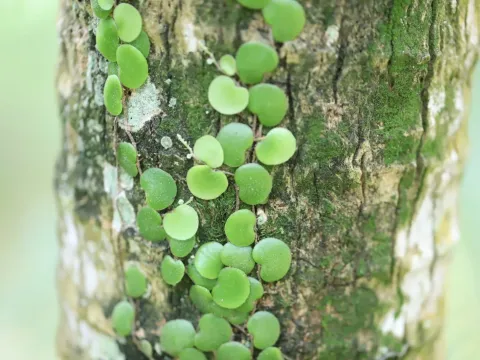
Drymoglossum
Drymoglossum
Drymoglossum is a genus of epiphytic ferns within the Polypodiaceae family. Native to tropical regions of Asia, these plants typically grow on tree branches and rock surfaces, absorbing moisture and nutrients from the humid air and decomposing organic matter found in their natural habitats.
What the section contains
Drymoglossum
To cultivate this fern successfully, one must replicate its natural forest-understory conditions. The plant thrives in bright, filtered light and should never be exposed to direct, intense sunshine, which can cause severe dehydration and scorching of its delicate leaf structures.
High humidity is the most critical factor for the longevity of Drymoglossum. It is highly recommended to keep the plant in a terrarium or a room with a dedicated humidifier, maintaining humidity levels consistently between 70 and 85 percent throughout the entire growth cycle.
The substrate must be highly specialized, mimicking the porous bark layer of its natural hosts. A mixture of orchid bark, perlite, and long-fiber sphagnum moss provides the essential aeration required by the rhizomes, preventing compaction and the subsequent death of root tissue.
Watering requirements are best managed through misting or gentle irrigation with soft, room-temperature water. It is essential to balance moisture: the substrate should remain damp to the touch, but the roots must not sit in standing water, as this will lead to rapid decay.
Common pests include scale insects and spider mites, which exploit dry air conditions to colonize the foliage. Frequent monitoring and gentle leaf cleaning with mild insecticidal soaps are usually sufficient to manage these infestations without damaging the sensitive fronds of the fern.
Root rot is the primary physiological disease associated with poor drainage. Once the rhizomes become soft and discolored, the plant must be removed from its potting medium, cleaned of decayed tissue, and repotted into fresh, coarse material to restore the necessary gas exchange at the root zone.