
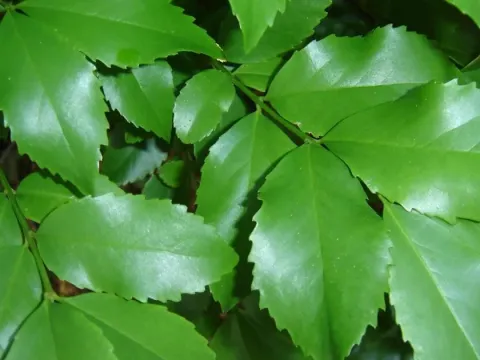
Laurelia serrata
Laurelia serrata
Laurelia serrata is an evergreen tree belonging to the Atherospermataceae family. In its native habitat, it can reach heights of up to 30 meters, characterized by a straight, gray-barked trunk and dense, shiny foliage.
What the section contains
Laurelia serrata
The species is native to the temperate rainforests of southern Chile and parts of Argentina. It thrives in maritime climates, requiring high humidity and mild temperatures, avoiding areas prone to severe frost or extreme heat.
To cultivate Laurelia serrata successfully, one must provide deep, well-drained, and nutrient-rich soils. While the plant requires consistent moisture, it is sensitive to waterlogging, which can damage its root system significantly.
The tree prefers sheltered locations where it is protected from strong, drying winds. Young saplings require partial shade to develop properly, mimicking the conditions of the forest floor before reaching the canopy level.
Agronomic management involves maintaining a slightly acidic soil pH and ensuring the forest floor remains rich in organic matter. Proper spacing during plantation is essential to allow for adequate airflow and crown development.
The primary agricultural and forestry use of Laurelia serrata is the production of its high-quality timber, commercially known as "tepa." This wood is prized for its fine grain, strength, and natural resistance to rot, making it excellent for high-end furniture and interior construction.
Beyond timber, the foliage of the tree contains aromatic essential oils used in the pharmaceutical and cosmetic industries. Sustainable harvesting practices ensure the longevity and productivity of the trees throughout their life cycle.
Yield metrics for this culture are measured in timber volume per hectare over several decades. Modern forestry practices prioritize selective harvesting to maintain the health and ecological integrity of the growing sites.
The tree also serves a critical role in watershed management. Its extensive root network helps stabilize soil on mountain slopes, preventing erosion and facilitating water retention in the surrounding ecosystem.
Economic efficiency is enhanced by utilizing leftover biomass from timber production for wood-based composite materials or as a source of organic mulch for reforestation efforts.
Fungal infections pose the most significant threat to Laurelia serrata, particularly in poorly ventilated or excessively damp environments. These pathogens can compromise the root system, potentially causing tree decline.
Leaf-eating insects are common pests that can affect growth rates, especially in young plantations. Regular health monitoring is recommended to manage pest populations before they cause widespread foliage damage.
Competition from invasive species can severely stunt the growth of young saplings during the establishment phase. Effective site preparation and periodic clearing are essential for ensuring a successful, healthy stand of trees.
Climate-induced drought stress makes the trees more susceptible to secondary infestations and diseases. Maintaining site-specific moisture levels is crucial for tree resilience against environmental stress factors.
Integrated pest management (IPM) is the preferred strategy for protecting these trees, focusing on biological controls rather than chemical interventions to preserve the local forest biodiversity.