
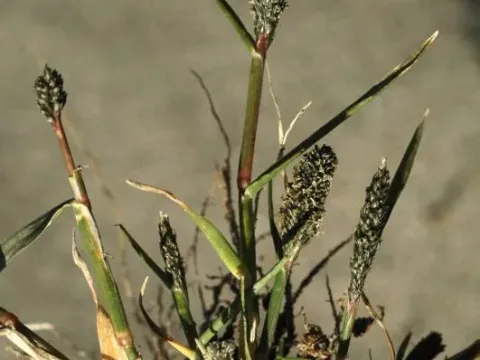
Heleochloa
Heleochloa
Heleochloa is a member of the Poaceae family. In nature, it propagates primarily through natural seed dispersal on wetlands and salt-affected soils during the recession of floodwaters.
What the section contains
Heleochloa
For agricultural cultivation, seeding should coincide with soil temperatures reaching 12–15 degrees Celsius. Due to the small size of the seeds, shallow placement is critical to ensure proper contact with moist soil.
The crop thrives in areas prone to periodic flooding, making it an ideal candidate for restoring degraded lands that are too wet or saline for traditional forage species.
Its agronomic potential lies in its ability to quickly establish vegetative cover, effectively stabilizing soil in challenging hydrological conditions where other grasses fail.
Successful establishment depends on maintaining soil moisture until the plants are well-rooted. Once established, the crop demonstrates high resilience to environmental fluctuations.
Heleochloa is a recognized halophyte, possessing unique physiological adaptations that allow it to grow in saline environments that inhibit most other agricultural plants.
The plant has strict moisture requirements; it prefers floodplains, lake margins, and areas with high water tables. It is capable of surviving temporary total submersion.
Climate preferences include regions with warm summers, as strong solar radiation accelerates vegetative growth. The species is well-adapted to the temperature fluctuations typical of steppe and semi-desert zones.
Soil profile is less critical than chemical composition and moisture content. The plant excels on heavy, clay-rich, or salt-laden soils where intensive agriculture is not feasible.
Light availability is essential for development; the plant does not perform well in shaded conditions, preferring open spaces in riparian and flooded meadow ecosystems.
The yield of green biomass depends significantly on the annual hydrological cycle. In favourable seasons, the crop forms dense stands that are valuable for extensive livestock grazing.
Its primary agricultural use is as a forage source. Livestock nutritional requirements are best met when the grass is grazed during the vegetative stage, before it reaches full maturity.
While less suitable for traditional hay production due to its low growth stature, it provides essential nutrition for cattle on marginal lands that would otherwise remain unproductive.
Seed harvesting presents challenges due to uneven ripening of the panicles. Specialized mechanical equipment is required to minimize seed loss during the harvest process.
The recovery potential after grazing is high, allowing for multiple usage cycles throughout the growing season in managed pasture environments.
Heleochloa exhibits remarkable natural resistance to common cereal diseases. Its survival strategy in extreme environments provides a degree of immunity that conventional crops lack.
Pests typical of other grasses rarely cause economic damage to this crop, largely because its native habitat is often hostile to the common pests of agricultural grains.
The primary threat to the crop is abrupt environmental modification, such as permanent drainage of wetlands or long-term deep-water inundation, which disrupts its life cycle.
Invasive species can compete with Heleochloa if soil conditions are artificially altered through excessive fertilization, which changes the competitive balance in favor of less specialized plants.
Maintaining long-term viability requires sustainable grazing practices to prevent overgrazing, which could expose soil to erosion and allow competitive weeds to colonize the area.