
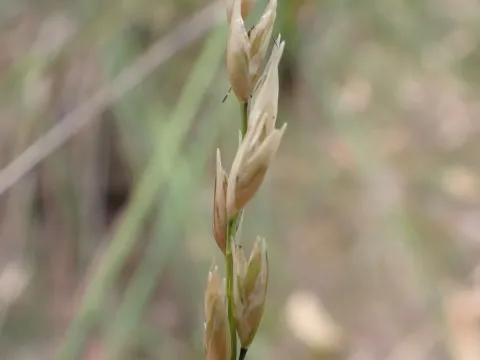
Heath grass
Sieglingia
Heath grass, scientifically known as Sieglingia decumbens, is a perennial grass species belonging to the Poaceae family. It is distinct for its low-growing, mat-forming habit, which allows it to thrive in challenging environments where competitive species often fail.
What the section contains
Heath grass
This species is well-adapted to acidic, nutrient-deficient, and damp soils. It is commonly found in heathlands, moorlands, and poor-quality meadows across Europe, indicating a significant tolerance for low pH levels and poor fertility substrates.
In terms of climate, the plant is highly hardy and frost-tolerant. It prefers moderate, humid climates where it can endure periods of waterlogging. It is remarkably resilient to harsh weather conditions, making it a persistent element of its natural habitat.
Botanically, the plant is noted for its cleistogamous flowers, which are hidden within the leaf sheaths. This reproductive strategy ensures successful seed production even in unfavorable environmental conditions, as the flowers are self-pollinated without needing to open fully.
Economically, heath grass is not typically utilized as a high-yield agricultural crop. However, it serves a functional role in stabilizing poor soils and providing ground cover in extensive grazing systems where more demanding forage grasses would struggle to survive.
Sieglingia decumbens demonstrates significant natural resistance to common cereal diseases. Its evolutionary history in extreme ecological niches has equipped it with robust defense mechanisms that prevent most fungal and bacterial infections.
The primary threat to the health of heath grass stands is the buildup of excess moisture, which can occasionally lead to minor fungal issues. This is most prevalent in areas with insufficient drainage or excessive organic mulch accumulation.
Insect pests that typically attack agricultural cereals usually ignore heath grass. Its chemical profile and toughened leaves make it an unattractive host for the majority of common agricultural pests, minimizing the need for pesticide application.
Competition from more aggressive, nitrogen-loving plant species represents the biggest threat. If a site is fertilized, heath grass is quickly outcompeted by taller, faster-growing grasses, leading to its eventual decline in the botanical composition of the grassland.
Mechanical damage from heavy machinery or overly intensive livestock trampling during wet conditions can harm the fragile root structure of the mat, potentially requiring extended recovery periods to maintain the integrity of the turf.