
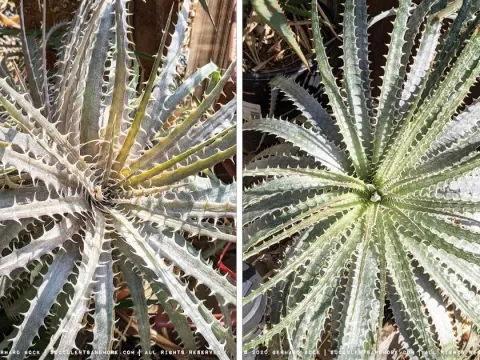
Hechtia glauca
Hechtia glauca
Hechtia glauca is a distinctive species belonging to the Bromeliad (Bromeliaceae) family. Unlike many other members of its family, this plant is a terrestrial succulent highly adapted to arid environments.
What the section contains
Hechtia glauca
Originating from the central regions of Mexico, this plant thrives in rocky, well-draining habitats. Its natural adaptation to harsh sunlight and limited precipitation makes it an excellent candidate for xeriscaping and arid-climate collections.
The plant features a dense basal rosette composed of stiff, glaucous leaves that are serrated along the margins. The characteristic blue-grey color is due to a waxy coating that serves as a protective mechanism against intense dehydration.
Cultivation requires a mineral-based substrate with excellent drainage properties. A mix of pumice, coarse sand, and a small portion of organic matter is ideal to mimic the natural geological conditions of its native habitat.
Temperature management is critical: the plant requires warm days for photosynthesis and cooler nights for proper metabolic balance. Overwatering, especially during the dormant winter months, is the most common cause of plant failure.
The primary threats to Hechtia glauca include fungal root rots caused by excessive soil moisture and poor ventilation. Proper spacing and airflow are essential to prevent the accumulation of moisture within the center of the leaf rosette.
Common pests such as mealybugs and scale insects may occasionally infest the base of the leaves. Regular inspection of the rosette center is recommended to identify and manage these pests in their early stages.
Harvesting of this plant is typically performed for propagation purposes. Once the mother plant produces offsets or pups, they can be carefully detached from the parent, allowed to callus, and planted in fresh, dry substrate to grow individually.