
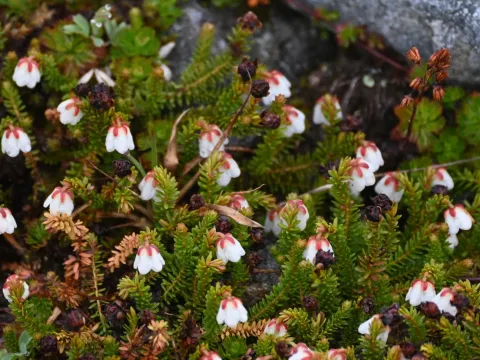
Harrimanella stelleriana
Harrimanella stelleriana
Harrimanella stelleriana is a low-growing, evergreen subshrub belonging to the Ericaceae (heather) family. It is a slow-growing species highly adapted to cold, mountainous, and arctic environments.
What the section contains
Harrimanella stelleriana
The plant is native to the northern regions of the Pacific, including Alaska and the Russian Far East. It thrives in high-altitude tundra, rocky slopes, and areas characterized by significant snow accumulation throughout the winter.
Cultivation requires specific conditions that mirror its natural habitat, including acidic, well-draining, and moisture-retentive soils. The substrate should be low in nutrients and high in organic matter like peat or decomposed needles.
Optimal environmental requirements include a cool summer climate and high atmospheric humidity. In garden settings, partial shade is essential to protect the plant from heat stress, which is a major limiting factor for its survival.
The agronomic management of this species involves careful watering to ensure consistent moisture while maintaining excellent drainage. Over-fertilization is detrimental, as the plant is adapted to nutrient-poor soil compositions.
The primary horticultural threat to Harrimanella stelleriana is root rot caused by poor soil drainage and waterlogging. Once the root system is compromised, the plant often fails to recover.
Poor air circulation and high humidity can lead to fungal issues such as powdery mildew, especially when the plant is kept in overly sheltered or humid indoor/greenhouse environments.
Spider mites are a common pest that thrives in warm, dry microclimates, significantly damaging the small, needle-like leaves of the shrub through sap extraction.
Leaf-eating weevils can also cause damage, leading to physiological stress and allowing secondary pathogens to infect the damaged tissues of the shrub.
Prevention involves maintaining a consistent cool temperature and ensuring the foliage remains relatively dry, especially during periods of high ambient humidity.