
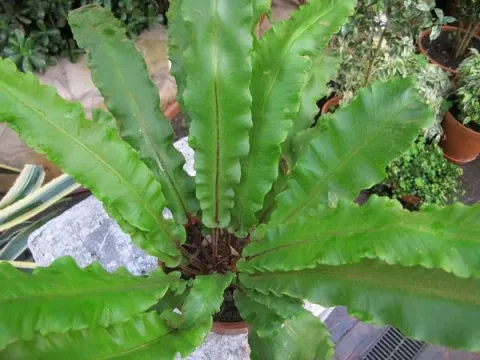
Hart's-tongue fern
Phyllitis
Hart's-tongue fern (Phyllitis) is a perennial vascular plant belonging to the Aspleniaceae family. It is native to temperate regions across the Northern Hemisphere, where it typically inhabits limestone cliffs, rocky crevices, and moist, shaded woodland environments.
What the section contains
Hart's-tongue fern
The plant is distinguished by its unique, strap-shaped, leathery fronds, which set it apart from the more common feathery fern species. These evergreen fronds grow in a rosette pattern, arising from a scaly, short rhizome that ensures the plant's longevity.
Successful cultivation of this fern requires a substrate that is rich in organic matter and has a neutral to slightly alkaline pH. Proper drainage is the most critical factor in its agrotechnics, as the rhizomes are highly susceptible to rot in waterlogged conditions.
Environmental conditions for Phyllitis must mimic its natural habitat, emphasizing high humidity and significant shade. The plant performs best in sheltered, cool areas of the garden where it is protected from direct sunlight, which can quickly scorch its foliage.
The primary horticultural use of this fern is in shade gardens, rockeries, and woodland-style landscapes. It is valued for its structural architectural appeal, providing a strong contrast to plants with finely divided leaves in low-light borders.
The most significant pathological threats to Hart's-tongue fern include various forms of fungal leaf spots and crown rot. These are primarily induced by excessive soil moisture and poor air circulation around the crown of the plant.
In terms of pests, slugs and snails are the most prominent offenders, frequently grazing on the young, succulent fronds. Effective control strategies involve the use of physical barriers or targeted baiting to prevent significant aesthetic damage during the growing season.