
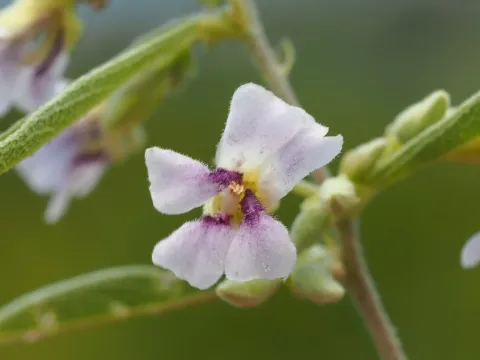
Helicteres angustifolia
Helicteres angustifolia
Helicteres angustifolia is typically sown in the spring when soil temperatures reach 18–20 degrees Celsius. The seeds possess a hard, dense coat, making scarification essential to ensure uniform and rapid germination.
What the section contains
Helicteres angustifolia
Sowing depth should be limited to 1–2 centimeters, ensuring that seeds are well-covered but not overly deep. Constant soil moisture must be maintained during the initial stages to facilitate successful sprouting.
Transplanting seedlings is the preferred method for commercial production, as it allows for better survival rates and protection against adverse environmental conditions during the early growth phase.
Spacing between plants should be maintained at 40–50 centimeters. This provides enough room for individual plant development and ensures proper airflow across the field to reduce moisture buildup.
Selecting an ideal sowing site involves choosing locations with full sun exposure and protection from strong, damaging winds, which can easily break the young stems of this crop.
As a member of the Malvaceae family, Helicteres angustifolia thrives as a perennial subshrub in tropical and subtropical environments. It requires significant warmth and consistent light for optimal development.
The crop demands well-drained, sandy loam soils with a neutral pH. Proper soil drainage is critical, as waterlogged conditions often lead to root decay and the decline of the plant’s vigor.
Temperatures ranging from 22 to 30 degrees Celsius are optimal for active growth. The plant is sensitive to cold, and development effectively ceases if temperatures drop below 10 degrees Celsius.
Regular applications of organic matter are highly beneficial for the plant's growth cycle. However, farmers should monitor nitrogen levels to avoid excessive vegetative growth, which can interfere with the production of active medicinal compounds.
While the plant shows some tolerance to short-term moisture deficits, consistent water supply during peak flowering periods is necessary to ensure maximum biomass production and quality.
The economic yield of Helicteres angustifolia consists primarily of its aerial parts and fruits, which are highly valued in traditional botanical medicine. Yield potential increases significantly from the second year onward.
Achieving high yields requires proper management, including the topping of stems to encourage lateral branching. This technique results in a denser, more productive shrub capable of yielding 5–8 quintals of dry material per hectare.
Timing the harvest is crucial to ensure that the accumulation of active phytochemicals is at its peak. Farmers must align the harvesting schedule with the specific phenological phases of the plant.
Effective harvest management involves selective cutting, allowing the plant to remain healthy for future harvest cycles. Careful handling of the plant minimizes physical damage and extends its productive lifespan.
Post-harvest processing, including gentle drying in shaded, ventilated areas, is vital to preserve the volatile oils and bioactive components that define the value of the final product.
Fungal diseases, especially those resulting from high humidity and poor air circulation, represent a major threat. Powdery mildew is a common concern that can quickly degrade leaf quality.
Root rot is another significant issue, typically caused by improper irrigation practices or poor site drainage. Implementing strict crop rotation and ensuring adequate soil health are key preventative measures.
Pests such as aphids and spider mites can cause substantial damage by feeding on plant sap, leading to stunted growth, leaf discoloration, and overall stress to the crop population.
An integrated pest management approach, utilizing biological controls or botanical insecticides, is encouraged over the use of harsh chemicals to ensure the safety and quality of the medicinal product.
Routine scouting of the field is necessary for early detection of pest or disease outbreaks, allowing for localized treatments that prevent wider spread across the farm.
The harvesting of the aerial parts is performed during the peak flowering stage. Manual collection is preferred to ensure that only the highest quality leaves and fruits are selected for further processing.
When harvesting fruits, specialized tools are required to perform clean cuts without damaging the main stems. This precision prevents secondary infections at the site of the cut.
Harvested material must be transported to the processing facility quickly to avoid overheating or quality loss. Proper aeration during transport is mandatory to maintain the integrity of the plant tissues.
Post-harvest cleaning involves sorting and the removal of debris or contaminated parts. This ensures that the final batch meets market standards for purity and medicinal effectiveness.
Storage should be conducted in climate-controlled environments, using breathable containers to prevent moisture accumulation and preserve the potency of the harvested product for longer periods.