
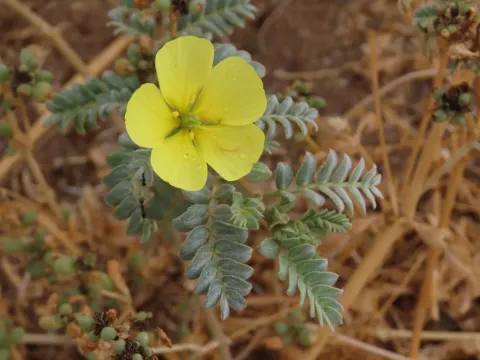
Tribulus pentandrus
Tribulus pentandrus
Tribulus pentandrus, a member of the Zygophyllaceae family, is an annual herbaceous plant adapted to arid and semi-arid environments. It is well-recognized for its resilience in harsh climatic conditions where other crops may struggle.
What the section contains
Tribulus pentandrus
The plant thrives in high-temperature environments with intense solar radiation. It requires a significant amount of heat during the growing season to achieve its full physiological potential and produce quality biomass.
Soil requirements for Tribulus pentandrus focus on excellent drainage and aeration. It performs best in sandy or sandy-loam soils, which are typical of its natural habitat. Heavy, water-logged soils must be avoided to prevent root rot.
Due to its drought tolerance, the plant is an excellent candidate for agricultural production in regions facing water scarcity. Its deep root system allows it to efficiently extract moisture from the deeper soil layers.
The geographical distribution historically covers Africa and parts of the Mediterranean. In a farm setting, it requires open, full-sun exposure to ensure optimal development and secondary metabolite accumulation.
The sowing window for Tribulus pentandrus begins when soil temperatures consistently reach +15°C to +20°C. Planting during colder soil conditions can significantly reduce germination rates and lead to uneven stands.
Seeds are typically sown in rows with specific spacing to allow for mechanical cultivation. The depth of sowing should be shallow, generally between 2 and 3 centimeters, to ensure that small seeds can successfully emerge.
Weed management during the emergence phase is critical. As a slow-starting crop, it can be easily outcompeted by weeds in the first few weeks, necessitating either manual weeding or careful mechanical inter-row cultivation.
Seed treatment such as scarification is often recommended to overcome dormancy issues. By slightly damaging the hard coat of the fruit, water uptake is accelerated, leading to more uniform and vigorous field emergence.
Maintaining proper plant density is essential for achieving a high yield. Agronomists recommend adjusting the seeding rate based on the specific site conditions and the intended use of the final biomass.
Harvesting Tribulus pentandrus occurs once the fruits have reached full maturity, characterized by a distinct change in color and hardening of the outer shell. Timing is essential to avoid premature seed shattering.
The standard harvesting procedure involves cutting the plants and allowing them to dry in windrows. This process ensures that the crop reaches an optimal moisture level before the final threshing stage.
Mechanical threshing requires careful machine calibration to avoid damaging the delicate fruit structures. Once threshed, the product should be cleaned to remove debris and dirt particles.
Drying the harvested material is a critical step in preserving quality. The material should be processed in well-ventilated areas with a temperature limit of +45°C to preserve heat-sensitive botanical compounds.
The primary utility of the crop lies in its pharmaceutical value. It is cultivated as a source of bioactive compounds, primarily steroid saponins, which are widely utilized in the health supplement and pharmaceutical manufacturing sectors.