
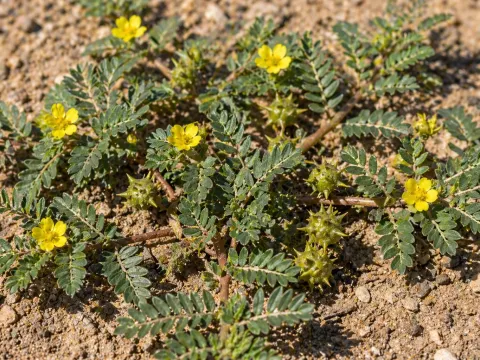
Tribulus bimucronatus
Tribulus bimucronatus
Tribulus bimucronatus is an annual herbaceous plant belonging to the Zygophyllaceae family. In its natural habitat, seeds begin to germinate when stable warm temperatures are established, with soil temperatures reaching 15–18 degrees Celsius.
What the section contains
Tribulus bimucronatus
The optimal sowing period is late spring, when the risk of late frosts is eliminated. To obtain uniform emergence, it is important to provide high light intensity, as this culture is extremely demanding of full sun exposure.
Sowing is performed in rows with inter-row spacing of approximately 45–60 centimeters. The seeding depth should not exceed 2–3 centimeters, which ensures sufficient oxygen access for embryo activation.
Pre-sowing soil preparation is a critical stage, involving deep loosening and surface leveling. The plant is sensitive to soil compaction, so soil porosity and aeration are the keys to forming a powerful root system.
During the germination period, it is crucial to maintain moderate substrate moisture while avoiding waterlogging, which can lead to the rotting of young seedlings in the early development phase.
The plant is a typical representative of xerophytic flora, adapted to dry and hot conditions of semi-deserts and arid zones. It prefers well-drained sandy or sandy-loam soils with a neutral or slightly alkaline pH.
The culture has high resistance to soil salinity, making it a promising candidate for cultivation on specific types of land. Excessive moisture is a destructive factor, contributing to the development of root rots.
The temperature range for successful vegetation should be between 25–35 degrees Celsius. The plant exhibits phenomenal photosynthetic capacity during moisture deficits due to the physiological structural features of its leaves.
Intensive growth requires fertilization with a focus on micronutrients that stimulate the accumulation of biologically active substances. Large doses of nitrogen fertilizers are not recommended as they reduce the quality of the plant raw material.
Agrotechnics include regular inter-row cultivation aimed at eliminating weeds that can suppress Tribulus growth in early stages by competing for sunlight and nutrients.
The economic use of this crop is aimed at obtaining medicinal raw materials containing a wide spectrum of saponins and flavonoids. The yield of green mass directly depends on the quality of care and compliance with temperature regimes during flowering.
The maximum yield of dry raw material is observed during the full bloom phase, when the concentration of active compounds in the aerial part of the plant reaches its peak.
For industrial use, the crop is grown on specialized plantations where mechanized care methods are employed. Proper agrotechnics allow for the harvest of several tons of raw material per hectare while maintaining optimal planting density.
The productivity of the plant also depends on the length of the growing season; in hot and dry years, with adequate irrigation, the quality indicators of the plant extract significantly increase.
The quality of the harvested product is determined by the absence of weed impurities and the correct drying process, which should be performed in the shade with good ventilation to preserve the chemical composition.
The main biological threats to Tribulus are fungal diseases of the root system that occur due to waterlogged soil. Powdery mildew can affect leaves under high humidity conditions at night.
Pests such as spider mites and various aphid species pose a danger during dry periods when plants are weakened by moisture deficits. Combating them requires the use of environmentally friendly protection methods.
In the early stages of development, seedlings may be damaged by soil pests, making prophylactic seed treatment a necessary measure to protect crops.
Competition from aggressive weeds is the main factor reducing yields in the first weeks after emergence. Timely soil loosening minimizes the risks of pathogen spread.
- Powdery mildew infections
- Root rots during water stagnation
- Locust infestations during dry seasons
- Suppression of cultural plants by weeds
Harvesting is primarily conducted during the mass flowering phase when the content of valuable components is at its maximum. It is important to mow the stems before the spiny fruits mature, as they complicate subsequent processing.
The use of mechanized mowers significantly accelerates the green mass harvesting process on large areas. The harvested material is immediately sent for primary drying.
To preserve the medicinal properties of the plant, overheating the raw material above 45 degrees Celsius is not allowed, as this leads to the degradation of beneficial organic compounds and loss of marketability.
The dried plant material should be stored in dry, cool rooms with good air circulation, protected from direct sunlight and humidity.
Well-organized harvesting ensures long-term preservation of raw materials suitable for further processing in the pharmaceutical or cosmetic industries.