
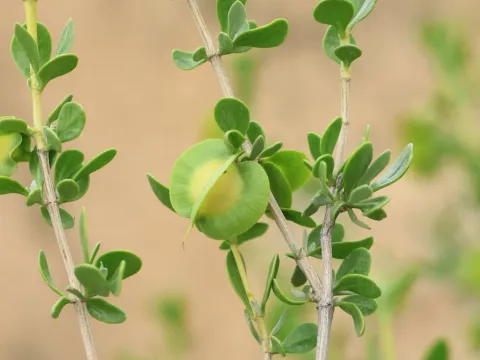
Zygophyllum
Zygophyllum
Sowing Zygophyllum requires careful timing, typically coinciding with the start of the wet season to ensure sufficient moisture for germination in arid environments.
What the section contains

Zygophyllum
The seeds possess a hard coat, making scarification or pre-soaking essential to improve germination rates and uniformity in field conditions.
Seeds should be planted at a shallow depth of approximately 1 to 2 centimeters, ensuring they are not buried too deeply to sprout successfully through dry soil.
Row planting with wide spacing is the preferred method, as it reduces competition for water and allows the young plants to develop strong root systems.
During the first year, seedlings grow slowly as they invest their resources into deep root development, requiring a weed-free environment to establish properly.
Zygophyllum belongs to the Zygophyllaceae family and is recognized for its exceptional adaptation to saline, desert, and semi-desert conditions globally.
The plant thrives in sandy or rocky soils and is highly resilient to alkaline or saline environments where most other crops fail to grow or develop.
High temperatures and intense solar radiation are not deterrents for Zygophyllum, as the plant uses its succulent leaves to store water for extreme dry periods.
Minimal moisture is required for survival; the plant's physiology is optimized for long periods of drought, making it a staple of desert ecosystems.
Proper cultivation must avoid over-irrigation, as excessive soil moisture can cause root stress and leave the plant vulnerable to rot or decay.
The yield of green biomass depends heavily on seasonal rainfall, but Zygophyllum maintains stable growth even during the harshest climate variations.
The primary economic use is as a reliable forage source for camels, sheep, and goats, especially during winter months when other vegetation is scarce.
Due to its high nutritional profile, it serves as a critical feed reserve, helping livestock maintain condition during extreme desert summers and winters.
In environmental management, Zygophyllum is widely used for phytomelioration to stabilize shifting sands and prevent wind erosion in degraded desert lands.
Management of these pastures requires rotating grazing cycles to allow plants to recover, ensuring sustained productivity over many years of use.
The most significant threat to Zygophyllum populations is overgrazing, which depletes the plant's reserves and prevents natural reseeding cycles.
Insect pests, such as locusts, can pose a localized threat during mass outbreaks, leading to significant foliage loss across large arid regions.
Fungal diseases are rare in natural desert habitats, but they may occur if the plant is subjected to poor drainage or stagnant water conditions.
Protecting the plants requires an integrated approach that focuses on maintaining ecological balance rather than relying on chemical pesticides.
Mechanical damage from vehicles or excessive human traffic can destroy the fragile succulent stems, which take a long time to regenerate in arid conditions.
Harvesting is not a typical commercial process; instead, Zygophyllum is utilized as a perennial grazing resource managed through strategic herd movement.
When seed collection is required, it is best performed manually once the fruits have fully dried and ripened to ensure maximum viability.
Leaving a portion of the population unharvested is a standard practice to support natural seed dispersal and maintain the density of the plant cover.
After collection, seeds should be cleaned and stored in dry, cool conditions to preserve their vitality for subsequent planting seasons.
Proper storage prevents moisture accumulation, which is the primary cause of seed degradation and loss of germinating power during storage.