
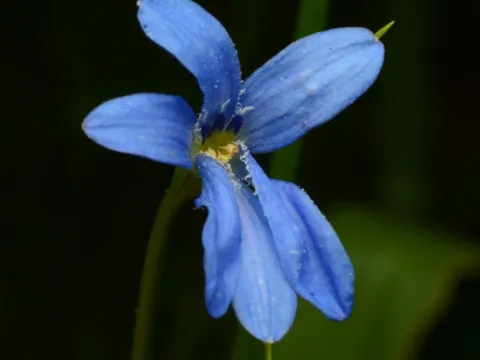
Tecophilaea violiflora
Tecophilaea violiflora
Tecophilaea violiflora is a rare cormous perennial belonging to the Tecophilaeaceae family. In professional and specialized cultivation, propagation is achieved through both seed sowing and the separation of corm offsets during the dormant season.
What the section contains
Tecophilaea violiflora
Seeds are typically sown in the autumn, requiring a period of cold stratification to break dormancy. Using a sandy, well-draining substrate is crucial to prevent the seeds from rotting before germination occurs in the spring.
Seedlings develop slowly and require careful handling. Transplanting should be delayed until the young corms are sufficiently established, ensuring that the root system is not disturbed during the delicate transition to individual pots or beds.
Vegetative propagation via corm offsets is the most reliable way to maintain the specific traits of the cultivar. Offsets are separated and replanted during the summer dormancy phase, allowing the roots to initiate growth as the plant enters its next cycle.
Proper substrate preparation is essential for successful establishment. Including grit or horticultural pumice in the soil mix ensures adequate drainage, which is the most critical factor for the longevity of the corms in any agricultural setting.
Native to the high-altitude regions of Chile, this species is adapted to a unique microclimate. It thrives in cool conditions and requires significant light to develop robust foliage and vibrant flowers, making it challenging to grow in areas with hot summers.
The ideal soil is porous, light, and slightly acidic or neutral. Heavy soils that retain excess moisture must be avoided, as they inevitably lead to the decay of the corms. Proper drainage is the foundation of successful Tecophilaea management.
Climate control is paramount; the plant requires a cool, dry summer dormancy and a moist, cool growing season. In non-native environments, greenhouse cultivation with climate control systems is often necessary to replicate these specific seasonal transitions.
Watering must be strictly managed: frequent enough during active growth to support development, but reduced to zero once the foliage begins to yellow. During the dormant period, the corms must be kept nearly dry to prevent fungal pathogens from attacking the root tissue.
Using a top dressing of gravel or coarse sand around the base of the plant helps maintain the neck in a dry environment. This simple agronomic technique significantly reduces the risk of basal rot, which is common in high-humidity cultivation settings.
The primary threats to Tecophilaea violiflora are fungal pathogens that thrive in poorly drained soils. Fungal rots, specifically those affecting the corm base, can destroy a collection rapidly if the moisture levels are not strictly regulated by the agronomist.
Pests such as thrips and aphids may damage the foliage and flower stalks. If left untreated, these infestations can drain the energy reserves of the corm, leading to reduced flowering and poor overall vigor in subsequent seasons.
Root-knot nematodes represent a serious, hidden threat that can impede nutrient uptake and overall development. Pre-planting treatment of the substrate and the use of certified, disease-free planting material are essential steps in effective crop protection.
Gray mold (Botrytis) can emerge in stagnant air conditions, particularly in greenhouses. Improving airflow and reducing ambient humidity during the flowering stage are effective ways to mitigate the risk of spreading such infections among the crops.
Regular inspection of the corms during the dormant phase is recommended to catch early signs of rot. Any symptomatic corms should be removed immediately from the cultivation area to prevent the pathogen from spreading to healthy plants.