
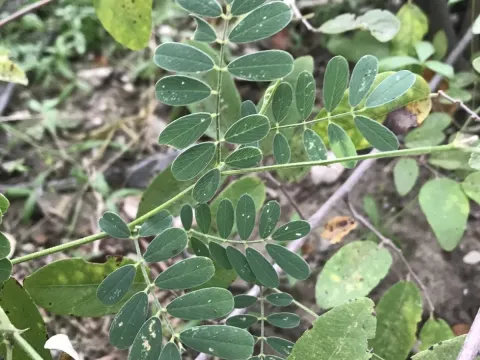
Tephrosia leptostachya
Tephrosia leptostachya
Tephrosia leptostachya is a nitrogen-fixing leguminous plant widely recognized for its role in sustainable agriculture and soil fertility improvement.
What the section contains
Tephrosia leptostachya
Sowing should ideally coincide with the onset of the rainy season to provide the necessary moisture for seed germination and root establishment.
Seeds are typically sown at a depth of 2–3 cm, ensuring they are adequately covered to protect them from desiccation and bird predation.
Spacing can be adjusted depending on whether the plant is grown for biomass production or for seed multiplication within agroforestry systems.
Early establishment is critical, as rapid growth allows the plant to shade out competitive weeds, reducing the need for manual or chemical weeding.
The plant thrives in well-drained sandy or loamy soils, demonstrating excellent adaptation to nutrient-poor environments where other crops struggle.
Tephrosia leptostachya requires full exposure to sunlight and is generally intolerant of shaded conditions, which can lead to sparse foliage development.
It displays high drought tolerance once established, thanks to its deep taproot system capable of tapping into subsurface moisture reservoirs.
An optimal temperature range of 20°C to 30°C is preferred, as extreme cold can cause significant physiological damage or stunt growth entirely.
Symbiotic relationships with rhizobia bacteria are essential; in soils where these are absent, inoculation of seeds can significantly enhance productivity.
Biomass production is highly responsive to favorable soil conditions and moisture availability, yielding impressive quantities of nitrogen-rich organic matter.
The consistent use of this plant as a green manure can lead to a measurable increase in soil organic carbon levels over several growing seasons.
Seed yields are also commercially relevant, as the seeds contain specific compounds useful in various botanical or agricultural applications.
Frequent cutting regimes can be implemented to harvest green matter multiple times per year, provided the plant is given sufficient recovery periods.
Roots play a dual role by fixing nitrogen and breaking up compacted subsoil layers, thereby enhancing the performance of subsequent crops.
Pests such as beetles and defoliating insects can occasionally attack young stands, necessitating early-stage monitoring of the field.
Fungal pathogens associated with leaf spots or root rot can develop under conditions of high humidity, poor soil drainage, or excessive plant density.
Root-knot nematodes can impact plant health over long periods; thus, crop rotation is a vital strategy to prevent pest population build-up.
Integrated Pest Management (IPM) practices, including the use of biological control agents, are recommended to maintain ecological balance in the field.
Maintaining proper plant density and sanitation helps mitigate the risk of disease transmission and ensures a robust and healthy crop stand.
Seed harvesting should be timed carefully, as the pods naturally dehisce upon drying, leading to significant seed loss if harvested too late.
For green manure purposes, harvest the biomass before the plant enters the lignified stage to ensure rapid decomposition when incorporated into the soil.
Post-harvest management involves sun-drying the harvested material to reduce moisture content, which is crucial for preventing spoilage during storage.
Storage areas must be clean, dry, and well-ventilated to protect seed viability and prevent the onset of mold or insect infestations.
Effective post-harvest handling ensures that the harvested output remains high quality, whether intended for field usage or market distribution.