
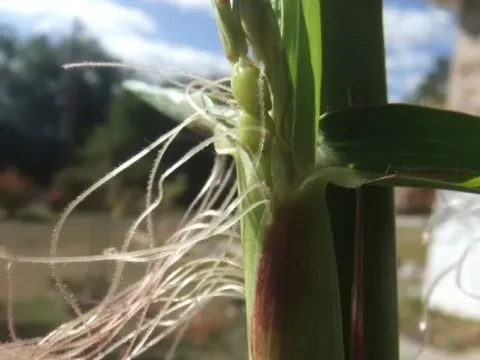
Teosinte
Euchlaena
Teosinte is a thermophilic plant; therefore, sowing must be performed only after the soil has warmed up to at least +12...+15°C at a depth of 10 cm.
What the section contains
Teosinte
In temperate climates, the optimal window for planting is late May or early June, once the risk of late spring frosts has completely passed.
The sowing density typically ranges from 15 to 20 kg of seeds per hectare, with row spacing between 45 and 70 cm depending on specific local farming practices.
Due to the hard seed coat, proper soil moisture during germination is essential to ensure a uniform emergence of seedlings across the field.
When intended for green forage, a higher density is recommended to maximize the total biomass per square meter while keeping the stalks relatively thin.
Belonging to the Poaceae family, teosinte is the closest wild relative to modern maize, meaning it thrives under high light intensity and long, warm growing seasons.
The crop prefers fertile, well-drained loamy soils with a neutral to slightly acidic pH and strongly dislikes waterlogged or marshy conditions.
One of the most notable advantages of teosinte is its superior drought tolerance compared to commercial corn, supported by an extensive and deep root system.
The ideal temperature range for rapid growth is between +22°C and +30°C, and the plant is highly sensitive to any temperatures below freezing.
Fertilization, particularly with nitrogen, significantly boosts its ability to tiller, which is crucial for maximizing the yield of green forage throughout the summer.
Teosinte is highly productive, capable of generating massive amounts of vegetation within a single season thanks to its strong regenerative capacity after cutting.
Under optimal management and favorable weather, biomass yields can reach 30 to 50 metric tons per hectare, providing excellent value for livestock farms.
Its unique ability to produce multiple cuts per season makes it an essential part of the "green conveyor" strategy for providing livestock with fresh nutrients.
Dry matter content typically accounts for 20–25% of the total biomass, making it an ideal candidate for high-quality silage or haylage production.
Realizing the full yield potential requires strict adherence to agrotechnical standards, including weed control and maintaining optimal plant density.
Generally, teosinte is more resilient to many common corn diseases, yet excessive humidity can occasionally promote fungal growth on its robust stems.
The main pests are stalk-boring insects, which can invade the plant tissue, thereby reducing its nutritional value and overall structural integrity.
Early-stage seedlings might be vulnerable to frit fly infestations in some regions, necessitating regular scouting and appropriate preventive measures.
Maintaining a proper crop rotation cycle is the most effective way to prevent the buildup of soil-borne pathogens and pests common to the maize family.
Overall, teosinte is considered an easy-to-grow crop compared to commercial hybrids, provided the soil is properly prepared and the site is weed-free during establishment.
Harvest timing is crucial: for the highest silage quality, the crop should be mowed during the tassel-emergence phase before the stalks become too woody.
When aiming for multiple harvests, the initial cut should be made 10–15 cm above the soil surface to facilitate the rapid development of secondary shoots.
Standard forage harvesting machinery is effective for processing the thick stalks, provided the equipment is adjusted for high-biomass cereal crops.
Prompt processing after mowing is vital, as the high water content of fresh teosinte can lead to spoilage if the material is not stored quickly.
Efficient management of the harvest cycle allows farmers to optimize the sugar content and nutritional density of the forage preserved for winter feeding.