
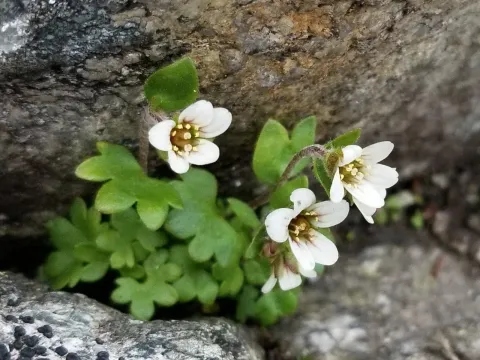
Carpathian saxifrage
Saxifraga carpatica
Carpathian saxifrage (Saxifraga carpatica) is a perennial plant belonging to the Saxifragaceae family. Native to the Carpathian mountains, it is uniquely adapted to high-altitude environments and rocky substrate habitats.
What the section contains
Carpathian saxifrage
The plant thrives in cool, temperate climates and requires well-drained, porous soil to mimic its natural scree environment. It is essential to ensure that the planting site has excellent drainage to prevent crown rot.
Regarding light requirements, this species prefers partial shade to full sun, provided that the soil remains consistently cool. In hot summer climates, providing afternoon shade is critical to prevent heat stress.
Cultivation practices should emphasize low soil fertility. Excessive fertilizer applications often lead to leggy growth and increased vulnerability to disease, making it best to use minimal, controlled-release fertilizers.
In terms of agricultural and horticultural use, Carpathian saxifrage is highly valued as a specimen plant for rock gardens, crevice plantings, and alpine troughs where its rosette-forming habit can be fully displayed.
The primary threats to Carpathian saxifrage are fungal infections, particularly root and crown rots caused by poor drainage. Excess moisture trapped within the foliage is a frequent catalyst for these issues.
Powdery mildew represents a common foliage disease, especially in stagnant air conditions. Improving plant spacing and air circulation significantly reduces the risk of fungal outbreaks in the garden.
Aphids are frequent pests that colonize the flower stalks during the spring. Early detection is crucial, as their feeding can distort flower development and weaken the overall vitality of the plant.
Spider mites pose a significant challenge during hot, dry weather conditions, manifesting as fine webbing and leaf discoloration. Implementing regular inspections helps in applying timely treatment.
Slugs and snails can cause substantial damage to the tender leaves of the rosettes. Utilizing perimeter barriers or natural deterrents around the plants is an effective strategy to minimize herbivore damage.