
Blue mountain saxifrage
Saxifraga caesia
Description
Growing requirements
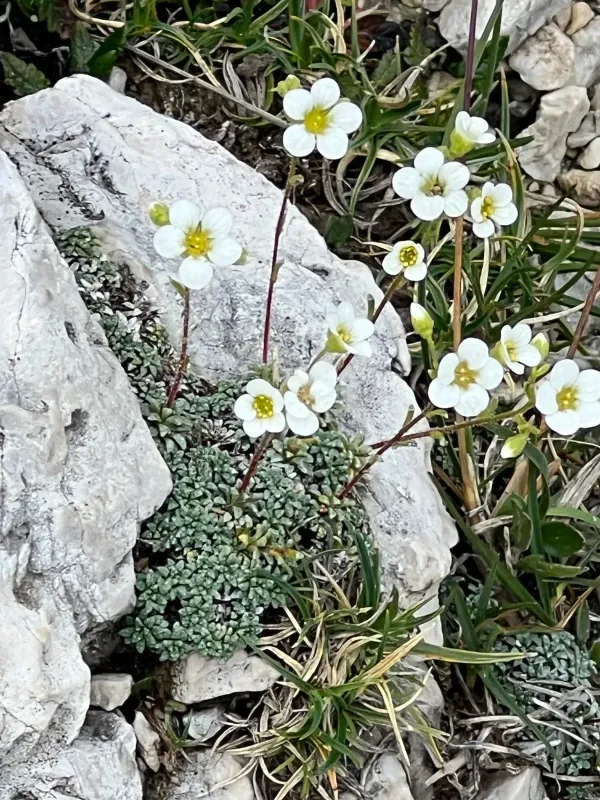
Blue mountain saxifrage (Saxifraga caesia) is a perennial herbaceous plant belonging to the Saxifragaceae family. This species is a small succulent that forms dense, cushion-like mats, typically found in limestone crevices within mountainous regions.
The native distribution range spans across the major mountain ranges of Europe, including the Alps and the Carpathians. The plant is highly adapted to high-altitude ecosystems, thriving in nutrient-poor but calcium-rich rocky substrates.
In cultivation, this species requires well-drained, gritty soil. Incorporating limestone chips into the growing medium is essential to mimic its natural habitat and provide the necessary pH levels for optimal growth.
The plant thrives in cool, alpine climates. When grown in lower altitudes, it is best placed on north-facing rock gardens or scree beds to protect the delicate foliage from the scorching afternoon sun.
Its botanical profile features tiny, glaucous leaves arranged in tight, overlapping rosettes. These rosettes produce short, slender stems bearing white flowers, which are highly valued in alpine landscaping.
Main diseases and pests
The primary threat to the health of Saxifraga caesia is fungal disease caused by poor drainage and excessive moisture, which leads to rapid root and crown rot.
Environmental stress is often a precursor to infection; therefore, maintaining proper air circulation around the plants is critical to preventing the spread of mold and rot pathogens.
Pests such as snails and slugs are frequent visitors in damp environments and can easily consume the succulent foliage, leaving unsightly holes and damaging the plant's structure.
Spider mites can also be problematic during prolonged hot and dry periods, requiring close monitoring and timely intervention if signs of infestation appear on the rosettes.
Cultural prevention remains the best defense, including the use of gravel mulch to keep the base of the plant dry and ensuring the planting site has excellent, quick-draining soil characteristics.