
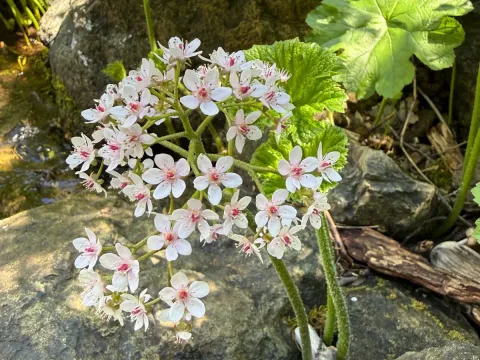
Darmera peltata
Darmera
Darmera peltata, commonly known as the umbrella plant, is a robust herbaceous perennial belonging to the Saxifragaceae family. This species originates from the western United States, where it naturally thrives in riparian habitats and damp woodlands.
What the section contains
Darmera peltata
Botanically, it is characterized by a thick, creeping rhizome that produces large, rounded, peltate leaves. These leaves emerge on long stalks, often reaching up to three feet in diameter, while delicate pink flowers appear on tall, leafless scapes in early spring.
Cultivation requires specific environmental conditions, primarily consistent moisture and partial shade. It is an ideal plant for rain gardens, the banks of water features, or low-lying areas where the soil remains damp and rich in organic matter throughout the growing season.
Agricultural practices involve incorporating compost or well-rotted manure during planting to ensure long-term soil fertility. While it is hardy in many climates, protective mulch is recommended in colder regions to prevent deep freezing of the shallow, spreading rhizomes.
Host-plant utility is centered on ornamental landscapes, where its bold foliage provides a tropical aesthetic in temperate gardens. It serves as an excellent ground cover in moist, shaded environments, effectively suppressing weeds through its dense leaf canopy.
Darmera peltata is generally resistant to most plant diseases, but it is highly susceptible to damage from gastropods. Slugs and snails are the primary pests that find the succulent foliage particularly attractive, often creating holes in the leaves.
Root rot is the main threat associated with poor soil structure. If the soil remains stagnant and waterlogged for extended periods, the rhizomes may succumb to fungal infection, particularly in heavier, non-draining clay soils.
Integrated pest management strategies for this crop include the use of copper barriers or organic bait pellets to protect leaves from slugs. Maintaining proper spacing and air circulation around the plants helps reduce the incidence of fungal issues.
Sanitation practices are essential for keeping the planting bed clean. Removing dead leaves at the end of the season prevents overwintering sites for pests, ensuring that the new growth in the following spring is off to a healthy start.
Overall, providing a location that mimics its native habitat minimizes the need for intervention. When given appropriate moisture and light, the umbrella plant demonstrates exceptional vigor and requires minimal pesticide application to maintain its health.