
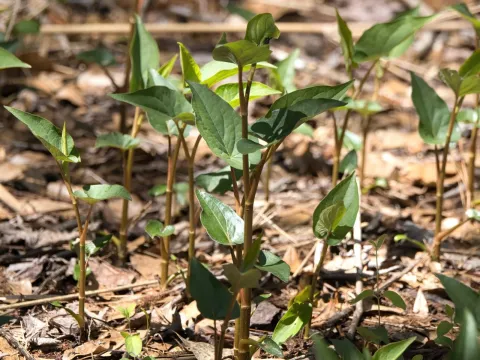
Lizard's tail
Saururus cernuus
Sowing seeds of Saururus cernuus is best performed in spring when temperatures consistently range between 15 and 20 degrees Celsius to ensure germination.
What the section contains
Lizard's tail
Seeds require a consistently moist substrate or shallow water immersion to break dormancy and trigger the development of the primary root system.
Vegetative propagation via rhizome division is the preferred commercial and hobbyist method, as it ensures high survival rates and rapid establishment.
Division should be carried out during the dormant season or early spring, ensuring each piece contains at least two healthy growth buds.
When planting, ensure the rhizomes are secured firmly in the aquatic soil at a depth of 5 to 10 centimeters to prevent them from floating away.
Lizard's tail is a perennial herbaceous plant belonging to the Saururaceae family, native to wetlands across North America.
The plant thrives in sunny to partially shaded conditions, ideally in rich, loamy, or organic-heavy soils that remain permanently saturated with water.
It prefers acidic to neutral pH levels, and while it adapts to various soil types, it requires consistent moisture to maintain its vibrant green foliage.
Water depth is a critical factor for successful cultivation, with the plant performing best in shallow water areas or damp, marshy soils.
The plant demonstrates excellent winter hardiness, provided the rhizomes are submerged in water or covered with a protective layer of ice or mulch.
Fungal pathogens are the primary threat, often occurring in poorly circulated water where organic debris accumulates and creates a stagnant environment.
Leaf spot diseases can develop if the foliage remains wet for prolonged periods in humid, stagnant air without sufficient sunlight.
Pests such as aphids can occasionally infest the plant, particularly during hot summers when the plant's overall vigor might be temporarily reduced.
Good pond hygiene, including the removal of decaying leaves and debris, is essential to prevent the spread of diseases within the aquatic environment.
Natural predators of pests, such as ladybugs, should be encouraged in the garden area to provide biological control against potential infestations.