
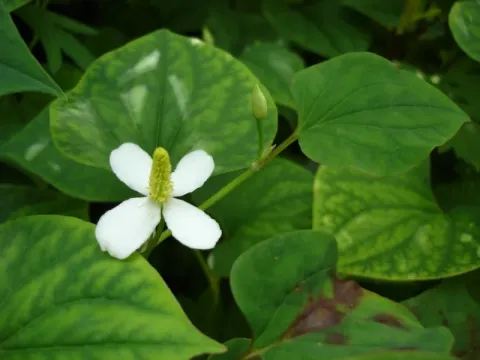
Houttuynia cordata
Houttuynia
Houttuynia cordata, a member of the Saururaceae family, is a perennial herbaceous plant known for its distinctive foliage and medicinal properties. Propagation is most efficiently achieved through vegetative means, specifically by dividing rhizomes, which allows for rapid establishment of new patches.
What the section contains
Houttuynia cordata
The optimal time for planting rhizomes is in early spring once the soil temperature consistently reaches 10–12 degrees Celsius. In controlled greenhouse environments, planting can commence earlier to ensure a steady supply of fresh leaves.
Seed-based propagation is also possible, though germination is generally slower and requires a period of cold stratification. Sowing in late winter in seed trays provides the best results for consistent crop development.
For commercial production, a spacing of 30 by 30 centimeters is recommended. Since Houttuynia spreads rapidly through underground stolons, it is essential to manage its boundaries to prevent it from becoming invasive in surrounding areas.
The plant demonstrates excellent recovery after transplantation, allowing growers to maintain mother blocks of healthy stock material that can be divided periodically for expanding production areas.
As a plant naturally adapted to moist environments and marshy areas across Southeast Asia, Houttuynia requires high levels of soil moisture. Irrigation systems must be designed to keep the soil consistently damp throughout the growing season.
The species prefers partial shade, particularly in climates with intense summer sunlight. Excessively bright, direct light can cause the leaves to lose their vibrant colors and become prone to wilting if the moisture level is not perfectly maintained.
Soil quality should be high, enriched with organic matter and maintaining a near-neutral pH balance. Consistent application of compost or organic fertilizers promotes vigorous leaf growth and improved overall plant vigor.
In cooler climates, the plant requires adequate winter protection. Mulching is highly effective in preventing soil freezing, which protects the rhizomes from damage during the dormancy period in regions with harsh winters.
Houttuynia is remarkably adaptable and can even be grown in hydroponic systems, which are increasingly popular for indoor herb production, ensuring a high-quality product free from soil-borne contaminants.
Houttuynia cordata is known for its natural resistance to many common agricultural pests and diseases, largely due to the unique composition of essential oils within its tissues, which act as a natural deterrent.
The primary concern for commercial growers is the risk of root rot, often triggered by waterlogged conditions without sufficient soil drainage. Management involves ensuring that irrigation is calibrated to avoid standing water for extended periods.
Pests such as aphids or slugs may occasionally appear, especially in humid greenhouse environments. Integrated pest management, including regular scouting and maintaining clean surroundings, is typically sufficient to mitigate these issues.
Fungal leaf spots can occur when plants are grown at too high a density without proper airflow. Providing adequate space between plants and maintaining good ventilation reduces the microclimate humidity around the foliage.
Because the foliage is consumed fresh, growers avoid the use of chemical pesticides. Emphasis is placed on preventative cultural practices, ensuring a safe and organic final product for the consumer market.
Harvesting usually begins when the plants reach a height of approximately 20 to 30 centimeters, typically two to three months after the initial planting of rhizomes.
Leaves and stems should be harvested using sharp, clean tools to prevent crushing the tissues. It is best to perform the harvest early in the morning when the plant tissues are most turgid and aromatic.
The plant exhibits high regenerative capacity, allowing for multiple harvests within a single growing season. Care should be taken to leave enough biomass on the plant after each cutting to support quick regrowth.
Post-harvest management is critical, as the leaves are highly sensitive to wilting. Produce should be cooled immediately after harvest and stored in high-humidity containers to maintain freshness until delivery.
For long-term storage or processing, the leaves can be dried in cool, shaded, and well-ventilated locations. Drying should be done at low temperatures to preserve the volatile oils that contribute to the plant's characteristic aroma and health benefits.