
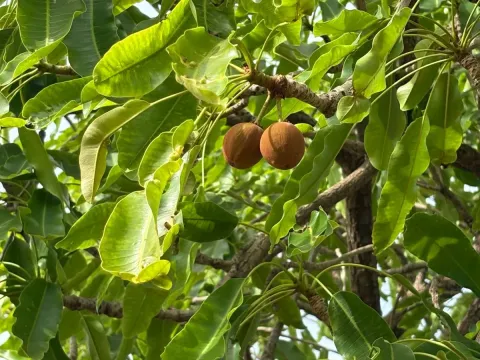
Vitellaria
Vitellaria
Vitellaria (Vitellaria paradoxa), commonly known as the shea tree, is a species of the Sapotaceae family native to the savanna regions of West and Central Africa. It is a slow-growing, perennial plant that has evolved to thrive in harsh, semi-arid environments.
What the section contains

Vitellaria
The crop requires a tropical climate with a distinct wet and dry season. It is extremely sensitive to frost and cannot tolerate temperatures near or below freezing, which strictly limits its distribution to equatorial latitudes.
In terms of soil, Vitellaria is highly adaptable and can grow in nutrient-poor, sandy, and lateritic soils where other crops might fail. Deep, well-drained soil is preferred to allow the tree's extensive taproot system to reach deep water reserves.
The tree exhibits several botanical adaptations to drought, such as thick, leathery leaves and a corky bark that provides fire protection. It is a massive tree, often growing up to 15 meters tall, with a canopy that provides vital shade in savanna ecosystems.
Economically, the tree is primarily grown for its seeds, which are rich in fats. The extracted oil, known as shea butter, is a globally traded commodity used extensively in the cosmetic, food, and pharmaceutical industries for its soothing properties.
Propagation is typically carried out via seeds. Because the plant develops a deep taproot early on, it is highly sensitive to transplanting. Therefore, direct seeding in the desired location at the start of the rainy season is the recommended practice.
The seeds have a short shelf life and must be planted as soon as possible after harvesting to ensure high germination rates. Young trees need protection from browsing animals and fire during the first few years of establishment.
Vitellaria is known for its slow maturation, often taking 10 to 15 years to start producing significant yields. However, the trees are long-lived and can remain productive for over 200 years, offering long-term sustainability for local communities.
Individual trees can yield from 15 to 20 kilograms of fruit annually when mature. Yields are highly variable depending on rainfall, soil fertility, and the tree's genetic background, making the selection of superior cultivars a focus of modern research.
The main threats to Vitellaria include fungal pathogens like anthracnose, which can damage leaves and fruit, especially during humid periods. Proper canopy management and sanitation are necessary to prevent the spread of infections.
Various insects, including fruit-boring larvae, pose a risk to the development of the seeds. Integrated pest management strategies are essential to protect the harvest, especially in large-scale agroforestry systems where chemical interventions are limited.
The harvest involves collecting ripe fruits that have fallen to the ground. This process is labor-intensive and requires multiple rounds of collection throughout the ripening season to prevent the fruit from rotting due to moisture.
- Cleaning the fruit pulp.
- Sun-drying the seeds (kernels).
- Storing in dry conditions to prevent mold.
Proper post-harvest handling is critical. If the seeds are not dried sufficiently before storage, the oil quality significantly degrades, reducing its market value for the cosmetic and food sectors.