
Wild dilly
Manilkara jaimiqui
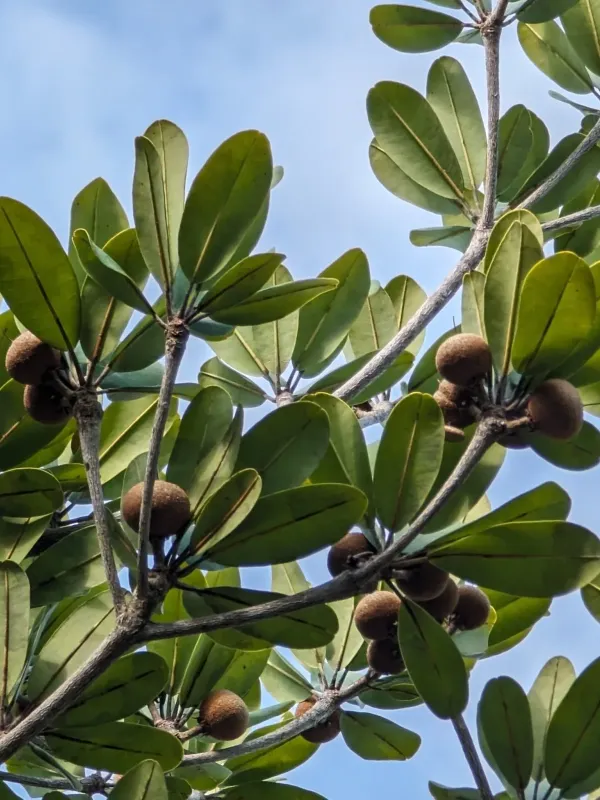
Description
Growing requirements
Manilkara jaimiqui, commonly known as Wild dilly, belongs to the Sapotaceae family. It is a slow-growing evergreen tree or shrub native to the Caribbean region, including the Florida Keys and parts of Cuba.
The plant is highly specialized for coastal environments. It thrives in well-drained limestone-based soils and rocky terrain, where it demonstrates remarkable tolerance to alkaline pH levels and poor nutrient availability.
Climate requirements include a frost-free environment with plenty of direct sunlight. Wild dilly is exceptionally adapted to salt spray and high wind conditions, making it an ideal choice for coastal landscape restoration.
Agricultural management requires focus on drainage. The species cannot survive in waterlogged soil, which significantly increases the risk of root rot pathogens in non-native environments.
Propagation is typically achieved through seeds, although the germination process can be slow. Nursery practices involve providing high light intensity and keeping the substrate consistently warm for optimal development.
Harvesting
The primary economic interest lies in its edible fruit, which is highly appreciated by local communities. The fruits are typically consumed fresh and are recognized for their sweet, dense pulp characteristic of the Manilkara genus.
The wood of the tree is extremely hard and heavy. Traditionally, it has been used in artisanal woodcraft to produce durable items that resist decay, often utilizing materials salvaged from mature trees.
In landscaping, Wild dilly serves as an excellent ornamental plant. It is frequently used for creating evergreen screens that can withstand harsh coastal weather without sacrificing visual appeal.
Harvesting should be done carefully to prevent bruising the fruit. As the crop ripens, monitoring is essential to ensure that the fruit is gathered at the peak of flavor before it drops to the ground.
Effective management includes light pruning to maintain a desirable shape and to improve airflow within the canopy, which helps in preventing fungal infections and pests typical for the Sapotaceae family.