
Vitellaria paradoxa
Vitellaria paradoxa C. F. Gaertn.
Description
Growing requirements
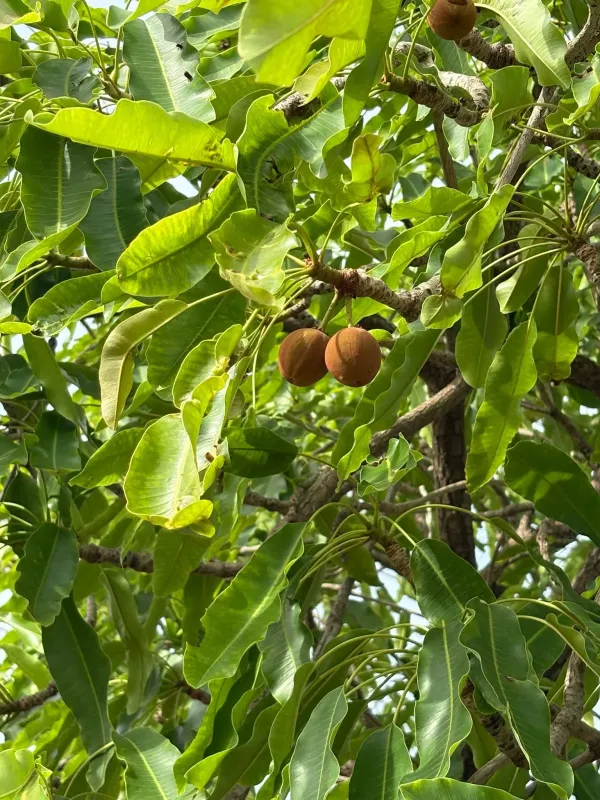
Vitellaria paradoxa, commonly known as the Shea tree, belongs to the Sapotaceae family. This tree is native to the savanna belt of West and Central Africa, playing a vital role in local agroforestry systems.
The tree thrives in semi-arid conditions and is highly adapted to tropical climates with a pronounced dry season. It serves as a resilient crop capable of producing high-quality fats in areas where other agricultural crops often fail.
The species requires well-drained, deep soils to support its extensive taproot system. It is sensitive to waterlogging, thus avoiding sites with poor drainage is essential for healthy orchard establishment.
Management practices typically involve protecting young trees from fire and herbivory, as the species has a very slow growth rate. Farmers often integrate shea trees into traditional farming systems, allowing crops to grow beneath the canopy.
The economic significance of the shea tree lies in its fruit, which contains oil-rich kernels. Shea butter, derived from these kernels, is globally recognized for its moisturizing properties in cosmetic products and as a substitute for cocoa butter.
Main diseases and pests
The primary threats include infestations by wood-boring insects and parasitic plants such as mistletoe, which can significantly reduce the vitality of the tree. Disease outbreaks are generally lower than in monoculture crops due to the scattered nature of shea stands.
Harvesting
Harvesting is labor-intensive, relying on the collection of fallen fruit from the forest floor. This process occurs annually during the rainy season and is the primary source of income for many rural communities in the production regions.