
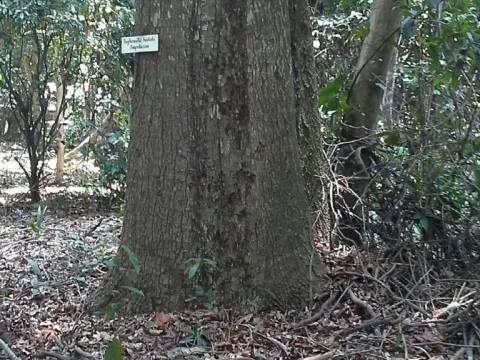
Tieghemella
Tieghemella
Tieghemella, commonly known as Makore, is a genus of large trees belonging to the Sapotaceae family. These majestic giants are native to the tropical forests of West and Central Africa and can grow up to 60 meters in height, playing a vital role in forest structure.
What the section contains

Tieghemella
The plant requires a strictly tropical environment with high humidity and consistent rainfall patterns. It thrives in lowland rain forests where the climate remains stable and temperatures rarely drop below 20 degrees Celsius, making it unsuitable for cooler regions.
Soil requirements for Tieghemella are specific, favoring deep, fertile, and well-drained soils. Because the tree develops a significant root system, it needs land that is free from prolonged waterlogging to prevent root diseases and ensure vigorous growth over its long lifespan.
Cultivation practices involve selecting appropriate sites that mimic the natural forest habitat. Young trees require careful management and protection from competing vegetation, as their initial growth rate is relatively slow compared to other fast-growing commercial species.
Sustainable forestry management is essential when handling Tieghemella populations. Due to the high value of its timber, over-harvesting is a concern, and planting initiatives are necessary to maintain forest biodiversity and ensure future harvests.
The primary economic output of Tieghemella is its timber, known commercially as Makore. This wood is highly prized for its exceptional durability, density, and rich, reddish-brown color, which makes it a preferred choice for fine joinery and high-end manufacturing.
Makore wood is extensively used in the production of luxury furniture, architectural veneers, and premium cabinetry. Its resistance to decay and insects makes it an ideal material for exterior construction, ship building, and heavy-duty flooring.
In addition to timber, the seeds of Tieghemella species are utilized for their oil content. These oils have traditional culinary applications and are also explored for their cosmetic and pharmaceutical potential, providing a secondary value to the plant.
The commercial lifecycle of a Makore plantation spans several decades. Harvesting must be timed correctly to ensure the wood has achieved its desired density and color, which significantly influences its market grading and final valuation.
Global demand for high-quality tropical hardwood keeps the economic significance of Tieghemella high. By adopting systematic management, producers can ensure a consistent supply of premium lumber while adhering to international forest conservation standards.