
Ecclinusa balata
Ecclinusa balata
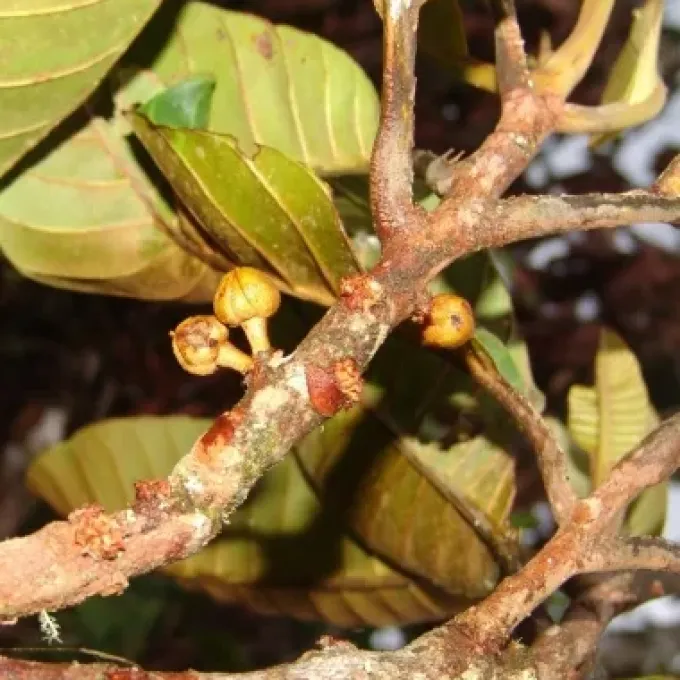
Description
Growing requirements
Ecclinusa balata is an evergreen tree belonging to the Sapotaceae family. In its natural environment, it grows in the rainforests of South America, preferring regions with high humidity and stable temperatures throughout the year.
For optimal development, this crop requires consistently moist, deep, and fertile soils with excellent drainage. The tree is extremely sensitive to temperature fluctuations and cannot tolerate even short-term frosts, limiting its range strictly to the equatorial zone.
The plant features a dense crown and can reach significant height, developing a thick, sturdy trunk. Its leaves are leathery and dark green, which helps the tree efficiently capture sunlight in the dense canopy environment of tropical forests.
Cultivation practices involve maintaining high ambient humidity and protecting young seedlings from direct scorching sunlight. The species is slow-growing, which requires careful monitoring of soil health and mineral nutrition levels during the early stages of establishment.
The primary economic value of the tree lies in the production of latex and high-quality timber. The durability of the wood and its resistance to decay make this species a valuable resource for local forestry and agricultural sectors in the Amazon basin countries.
Main diseases and pests
The main threats to this crop come from specialized tropical pests such as wood borers and various leaf-eating beetles. These insects can cause significant damage to young plantations, severely hindering their growth and overall vigor.
Fungal diseases, which thrive in conditions of waterlogging, can affect the root system of the tree. To prevent the loss of plantations, it is recommended to strictly follow drainage agrotechnical norms and avoid excessive moisture accumulation in the tree basins.
In its natural habitat, the tree faces competition from fast-growing weeds and invasive vegetation. Regular weeding and clearing of the area around young trees are essential care measures to ensure adequate access to soil resources.
Viral and bacterial infections are less common but require ongoing monitoring of the site's phytosanitary condition. Using only healthy propagation material and maintaining proper spacing between trees significantly reduces the risk of mass infestation.
Soil degradation resulting from monoculture cultivation can also negatively affect the plants' resistance to diseases. Integrated pest management systems help to minimize losses and maintain high productivity in these specialized tropical crops.