
Ecclinusa guianensis
Ecclinusa guianensis
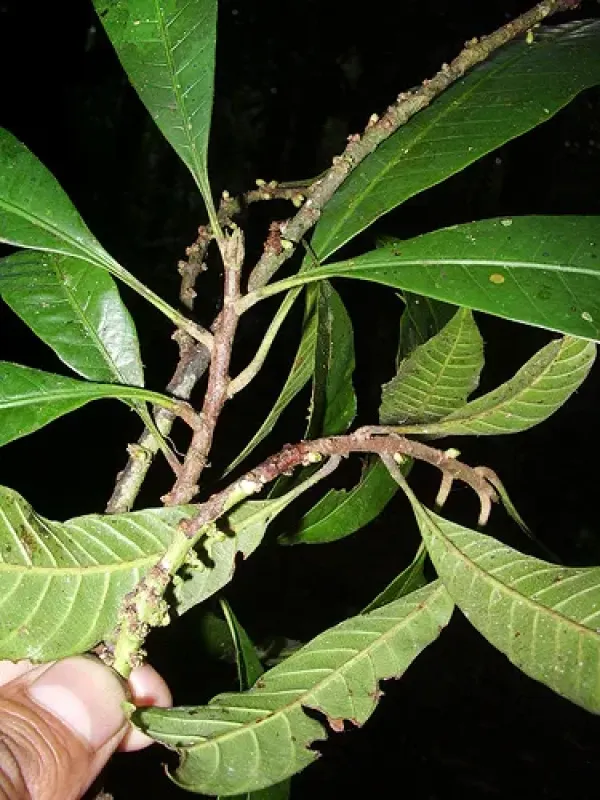
Description
Growing requirements
Ecclinusa guianensis is a member of the Sapotaceae family. It is an evergreen woody plant native to the humid tropical forests of South America, prominently found in the Amazon basin and the Guiana Highlands.
The plant has specific climatic requirements, favoring consistently warm temperatures without sharp seasonal fluctuations. The ideal environment for its growth is a region with high air humidity and significant rainfall throughout the year.
Regarding soil, the crop is moderately demanding: it thrives best on deep, well-drained, yet moisture-retentive substrates. It prefers acidic or neutral forest soils rich in organic matter, typical of tropical forest ecosystems.
Botanically, this tree features a dense canopy and leathery leaves that aid in moisture retention. Like many members of the Sapotaceae family, Ecclinusa produces latex found in various tissues of the plant.
In its natural habitat, the tree plays a vital ecological role as part of the upper canopy of the rainforest. Successful cultivation requires protection from drying winds, making agroforestry systems the most suitable approach for its development.
Yield
The economic use of Ecclinusa is primarily focused on its fruits, which are consumed by local populations. These fruits possess a specific taste and texture consistent with many species in the Sapotaceae family.
The wood of this species also holds value. It is dense and durable, finding applications in local construction and carpentry, where materials resistant to harsh environmental conditions are required.
In addition to fruits and timber, the latex of the plant is of research interest. While not a global industrial source of rubber, its biochemical properties are studied in the context of traditional medicinal use and sustainable exploitation.
Yields in wild populations vary greatly depending on the age of the tree and light availability within the forest strata. Targeted cultivation requires strategic spacing to ensure adequate sunlight for optimal fruit set.
Future prospects for the crop involve selection and breeding programs aimed at improving fruit flavor profiles and stabilizing yields within commercial tropical orchards.
Main diseases and pests
Major threats to the crop include pests common to tropical forests, such as wood-boring insects that damage the trunk and various leaf-chewing insects active in high-humidity conditions.
Fungal diseases pose a significant risk when agronomic practices are neglected. Excessive humidity coupled with poor air circulation facilitates the development of molds and rot on fruits and young shoots.
Fruit pests, including specific tropical fruit flies, can significantly reduce the quantity of marketable products. Management involves biological control methods and maintaining high ecological diversity.
Disturbance of the topsoil or changes in the local hydrological regime can induce plant stress, making them more susceptible to secondary infections and opportunistic pathogens.
Integrated pest management must be based on continuous monitoring and preventive measures, as the use of chemical pesticides in tropical agroforestry is generally discouraged to protect biodiversity.