
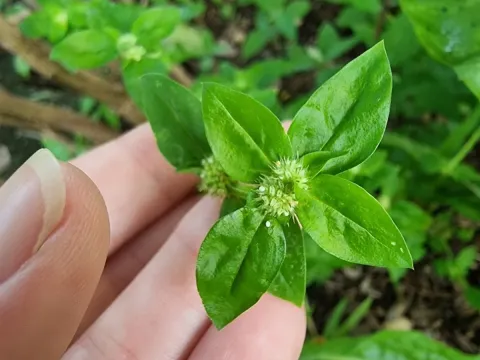
Spermacoce exilis
Spermacoce exilis
Spermacoce exilis is a notable herbaceous plant belonging to the Rubiaceae family. Distributed widely across tropical regions, this species is recognized for its tenacity and ability to thrive in diverse environments, ranging from degraded pastures to intensively managed agricultural lands.
What the section contains
Spermacoce exilis
The botanical structure of this plant includes a characteristic taproot that supports an upright or sprawling habit, often reaching a height of up to 50 cm. Its leaves are opposite and ovate-lanceolate, providing a dense canopy that helps in preserving soil moisture by reducing surface evaporation.
In terms of climatic preferences, Spermacoce exilis requires a warm, frost-free climate to maintain optimal metabolic activity. It is highly adapted to tropical rainfall patterns, demonstrating resilience against both brief periods of saturation and short-term drought episodes commonly found in its native ranges.
Regarding soil requirements, the species does not have stringent needs. It successfully colonizes various soil textures, from sandy loams to heavier clays, provided there is a basic level of drainage. It demonstrates a high tolerance for varying pH levels, which enhances its utility in different geographical areas.
From an agricultural perspective, while often managed as a weed, its potential as a ground cover cannot be overlooked. By protecting the soil surface from the direct impact of heavy tropical rain, Spermacoce exilis plays a functional role in reducing runoff and preserving topsoil structure in vulnerable regions.
The health of Spermacoce exilis populations is primarily threatened by fungal diseases favored by high ambient humidity. Foliar blights and rusts are frequent, especially during the peak of the wet season, leading to significant chlorosis and eventual necrosis of the older leaf tissue.
Insect pests present another major category of threats. Leaf miners, aphids, and various species of beetle larvae can cause substantial damage to the plant's photosynthetic capacity. These pests often proliferate if the crop density is too high or if natural enemies are suppressed by broad-spectrum chemicals.
Integrated Pest Management (IPM) is recommended for dealing with these issues. This includes promoting biodiversity within the farming area to encourage natural predators such as ladybugs and lacewings, which effectively keep aphid populations below the economic injury level.
Root zone pathogens are also a concern if the cultivation soil remains waterlogged for extended periods. Soil-borne fungi can weaken the root system, causing the plant to become susceptible to lodging and nutrient deficiencies, which are difficult to reverse once the damage has occurred.
Sanitation practices are essential for preventing the spread of diseases. Clearing crop residues and rotating fields with non-host species can significantly reduce the pressure of persistent soil-borne pathogens, ensuring the health and vigor of subsequent plantings of this species.