
Nertera granadensis
Nertera granadensis (Mutis ex L. f.) Druce
Description
Growing requirements
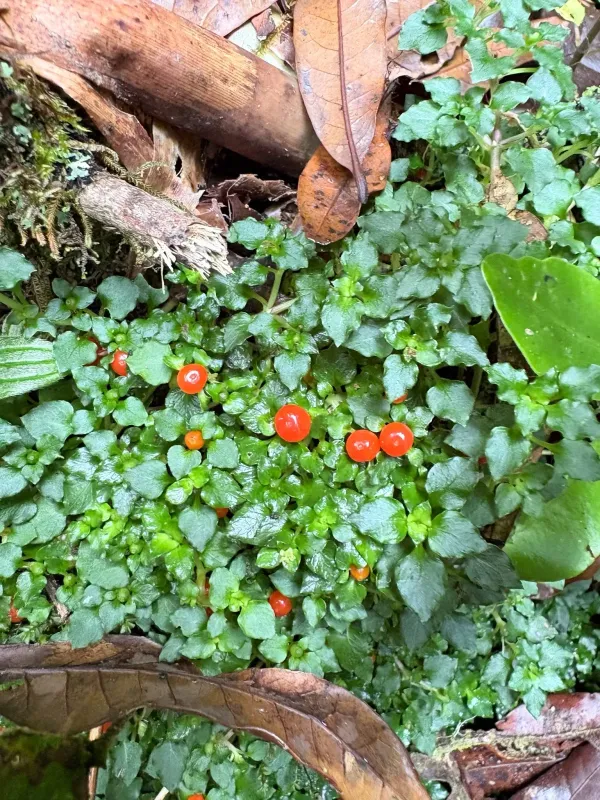
Nertera granadensis, commonly known as the coral bead plant, is a perennial herb belonging to the Rubiaceae family. Native to the damp, mountainous regions of Central and South America, as well as parts of Australasia, it has established itself as a prized decorative crop due to its unique aesthetic features.
The plant is characterized by a low-growing, creeping habit, with tiny, dark green leaves that form a dense mat. Its most distinguishing feature is the production of abundant, bright orange or red berries that persist throughout the season, giving the plant its common name and ornamental appeal.
Success in cultivating Nertera depends on providing bright, filtered light. Exposure to direct afternoon sunlight should be strictly avoided to prevent foliage scorch, especially in indoor environments where light intensity can be magnified by window glass.
The soil requirements for this crop involve a well-draining, moisture-retentive substrate that is slightly acidic. A mix of peat-based potting soil combined with perlite or coarse sand provides the necessary structure to support root development while preventing saturation.
Climate control is essential, as the plant prefers cool to moderate temperatures ranging between 15 and 22 degrees Celsius. During the active growth period, consistent soil moisture and high atmospheric humidity are required to ensure healthy development and fruit set.
Main diseases and pests
The most common pests affecting Nertera granadensis are mealybugs and spider mites, which thrive in environments where humidity levels are insufficient. Regular inspection of the dense foliage and localized treatment with horticultural soaps are recommended for effective management.
Root rot, often caused by overwatering or poor drainage, remains the primary pathogenic threat to the crop. To mitigate this risk, it is vital to ensure that the water does not pool at the base of the container and that the medium remains aerated.