
Mussaenda landia
Mussaenda landia
Description
Growing requirements
Mussaenda landia is a perennial shrub species belonging to the Rubiaceae family. This tropical plant originates from humid, warm regions where it thrives under high ambient temperatures and consistent moisture levels throughout the year.
The cultivation of this crop requires well-drained, nutrient-rich soils. A slightly acidic to neutral pH level is ideal for supporting nutrient uptake. Incorporating organic matter, such as compost or peat, is highly recommended to improve soil structure and water retention.
Optimal environmental conditions involve temperatures between 20°C and 28°C. The species is highly susceptible to cold stress and cannot withstand temperatures dropping below 15°C, making it strictly suitable for tropical or controlled greenhouse environments.
Agronomic management includes consistent irrigation, ensuring that the root zone remains moist but not waterlogged, which can trigger root rot. Fertilization should be performed periodically using balanced NPK fertilizers to encourage vigorous foliage and characteristic bract development.
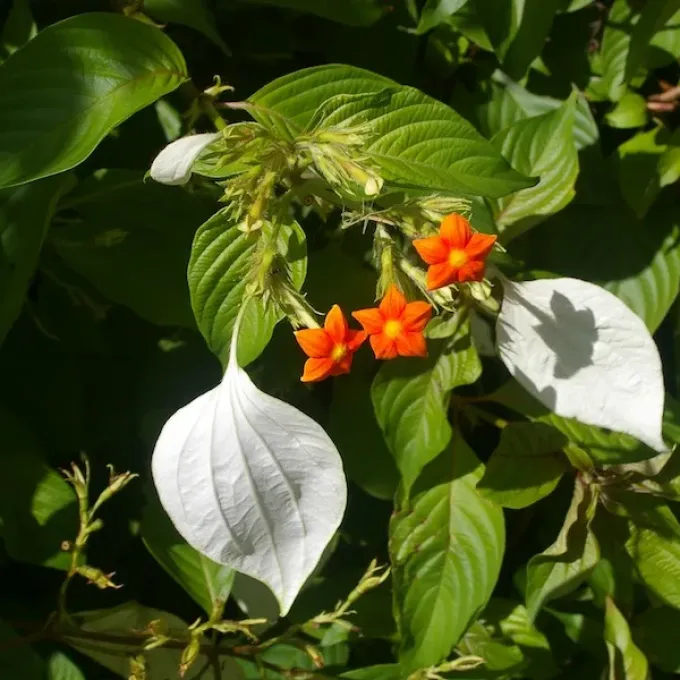
In terms of usage, Mussaenda landia is predominantly cultivated for ornamental purposes in landscaping. Its aesthetic value lies in its enlarged, colorful sepals, which make it a popular choice for public gardens and tropical landscape design projects.
Main diseases and pests
Spider mites are the most common pest affecting Mussaenda landia, particularly when the ambient humidity is low. Regular misting and the use of appropriate miticides are essential for controlling populations during dry seasons.
Mealybugs and scale insects may also pose a threat by extracting sap from tender stems. Integrated pest management strategies, including the use of horticultural oils or systemic insecticides, are advised to prevent significant damage.
Root rot, often caused by Pythium species, is a major concern when drainage is inadequate. Ensuring that containers or planting beds have excellent drainage capacity is the most effective preventative measure against these fungal pathogens.
Fungal leaf spots can occur when air circulation is restricted. Providing adequate spacing between plants and maintaining good ventilation reduces the environmental conditions that favor spore germination and disease progression.
Early detection of symptoms through regular field scouting is critical. Proactive sanitation, including the removal of dead or decaying plant material, helps maintain a healthy growing environment and minimizes the need for chemical intervention.