
Morinda persicifolia
Morinda persicifolia
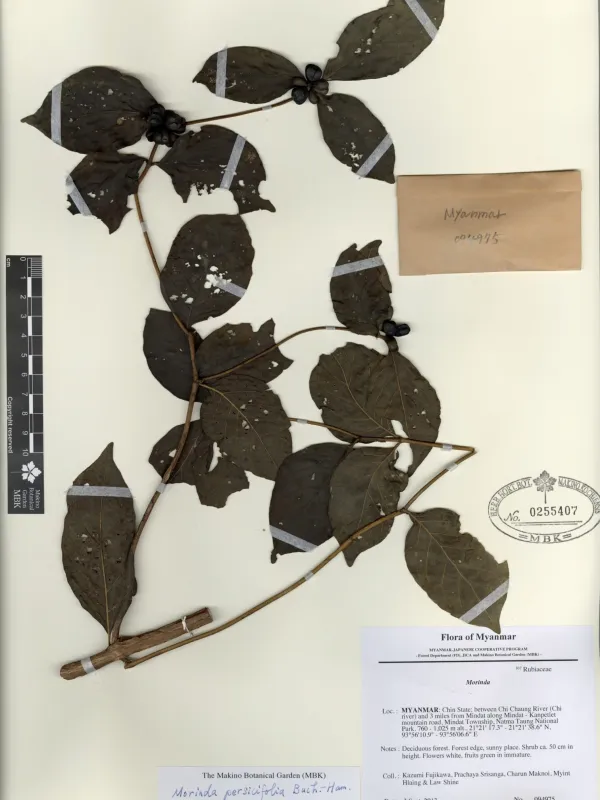
Description
Sowing dates
Morinda persicifolia is a tropical plant that requires specific environmental conditions for successful cultivation, primarily warm and humid habitats.
Seed propagation is the standard method, requiring high-quality, well-draining soil mixes rich in organic matter to encourage rapid germination.
Seeds should be sown in a nursery bed with a consistent temperature around 25-27 degrees Celsius, ensuring they stay moist but not waterlogged.
Transplanting seedlings to the field is recommended when they have developed at least four true leaves and a robust root system to withstand transplant stress.
Spacing should be managed to ensure adequate airflow between plants, reducing the risk of fungal infections during the early growth stages.
Growing requirements
This species belongs to the Rubiaceae family and thrives in tropical climates characterized by high moisture and stable temperatures throughout the year.
Soil requirements focus on high permeability; the crop cannot tolerate stagnant water, which often leads to root rot in poorly managed plantations.
While the plant prefers sunny locations, young specimens require partial shade to protect them from leaf scorching during the peak of the tropical sun.
A consistent watering schedule is essential, especially during the establishment phase, though mature plants demonstrate some resilience to dry spells.
Nutrient management involves applying balanced organic fertilizers to maintain high soil fertility, which is crucial for achieving superior biomass quality.
Yield
The primary economic output of Morinda persicifolia is the root, valued for its bioactive compounds used in various pharmaceutical and traditional medicine sectors.
Harvesting for root yield typically occurs 3 to 5 years after planting, as this duration allows for the optimal accumulation of secondary metabolites.
The yield can also include leaf harvesting for herbal extracts, provided that such practices are carried out in a way that does not stress the mother plant.
Technological improvements in soil preparation and irrigation can significantly increase the final biomass yield per hectare, ensuring a profitable agricultural cycle.
Monitoring growth rates throughout the season allows farmers to adjust fertilization and care, maximizing the efficiency of the plantation investment.
Main diseases and pests
Fungal diseases related to root systems are the most significant threat, often resulting from improper irrigation management or poor soil drainage.
Pests such as scale insects and spider mites frequently affect the crop when grown under glass or in conditions where air circulation is restricted.
Leaf-eating insects can cause significant cosmetic and physiological damage if not monitored, requiring early intervention with biological control agents.
Integrated pest management strategies are recommended to maintain plant health without introducing chemical residues into the valuable medicinal biomass.
Sanitation practices, including removing debris and thinning out overcrowded sections, are effective in preventing the spread of widespread pathogens.
Harvesting
Harvesting of the roots must be performed during dry periods to prevent soil compaction and to ensure the raw product remains clean for processing.
Roots are carefully lifted from the ground, washed thoroughly, and sorted by size to standardize the secondary processing steps that follow.
Post-harvest processing involves cutting the roots into uniform pieces, facilitating efficient drying and maintaining the chemical integrity of the active ingredients.
Drying should take place in well-ventilated areas away from direct sunlight, at controlled temperatures to prevent degradation of sensitive organic compounds.
Proper storage is essential; the final product should be kept in cool, dry conditions to ensure long-term stability and quality for market distribution.