
Hamelia chrysantha
Hamelia chrysantha
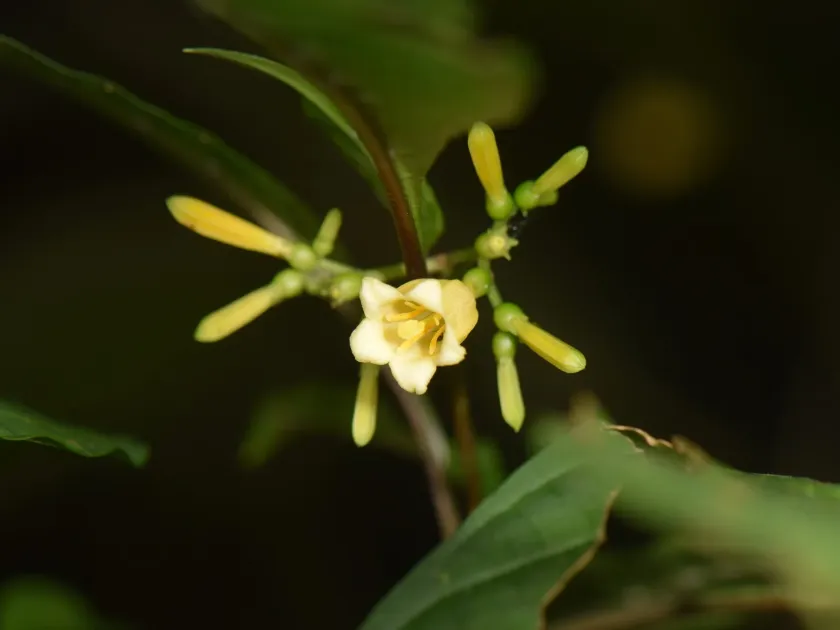
Description
Sowing dates
Hamelia chrysantha is an elegant shrub belonging to the Rubiaceae family. While primarily recognized for its ornamental value, its growth cycle is typical for tropical plants, requiring warm temperatures throughout the development stages.
Seed propagation is best performed during the spring season to maximize natural light exposure. The seeds should be sown in a well-draining, sterile peat-based medium at a shallow depth.
Maintaining a consistent temperature between 22 and 26 degrees Celsius is essential for successful germination. Keeping the seedbed moist without saturating it is the primary challenge during the early stages.
Seedlings are susceptible to damping-off if the humidity remains too high without proper ventilation. Ensuring air circulation in the greenhouse is vital for strong initial development.
Once seedlings have reached a size that allows handling, they are transplanted into individual pots to encourage stronger root systems before being transferred to their final growth location.
Growing requirements
This species demands a frost-free environment to survive. It thrives in locations with high ambient temperatures, making it unsuitable for cooler climates unless grown under controlled greenhouse conditions.
Bright, direct sunlight is preferred, although the plant can tolerate partial shade in high-heat areas. Insufficient light levels will lead to leggy growth and fewer flowers.
Soil quality must be high, prioritizing organic richness and excellent drainage. The plant does not tolerate heavy clay soils that retain moisture for too long, as this promotes root decay.
A consistent irrigation schedule is necessary to keep the soil evenly moist. However, growers should allow the top layer of soil to dry slightly between waterings to prevent root stress.
Nutrient management is straightforward, requiring a balanced liquid fertilizer during the growing season. Nitrogen-heavy formulas should be avoided to prevent excessive vegetative growth at the expense of blooming.
Main diseases and pests
Root rot is the most significant threat to Hamelia chrysantha. It is usually caused by overwatering or poor soil drainage, which inhibits oxygen exchange in the root zone.
Pest infestations, particularly scale insects and spider mites, are frequent in indoor environments. They can severely weaken the plant if left unchecked for an extended period.
Fungal issues, such as powdery mildew, may emerge if the humidity levels are too high combined with poor air circulation. Regular pruning is recommended to open up the canopy.
Nutrient deficiencies, particularly iron deficiency, can manifest as interveinal chlorosis. Providing chelated iron supplements can rectify these symptoms quickly.
Integrated Pest Management (IPM) practices, such as biological control and timely application of soaps or oils, are effective in maintaining the health of this shrub without over-relying on heavy chemicals.