
Hamelia cuprea
Hamelia cuprea
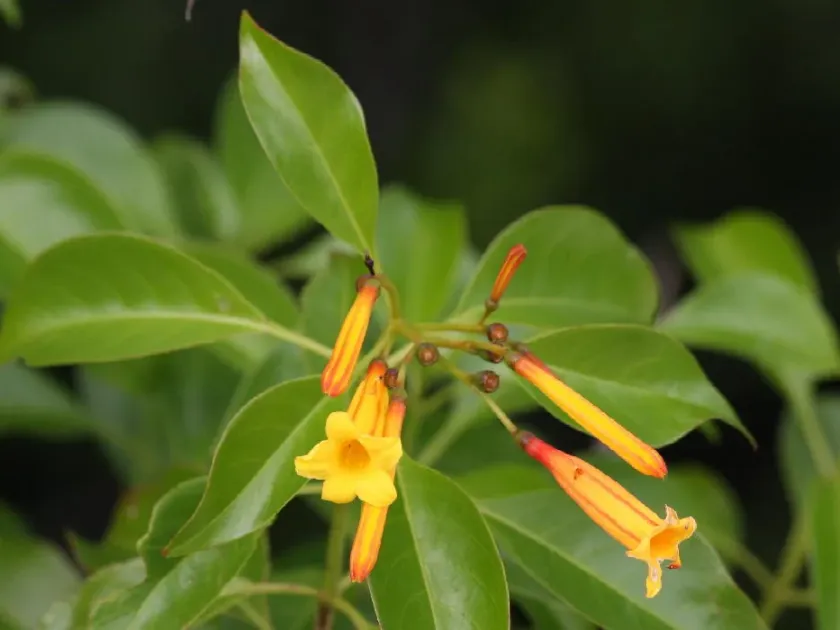
Description
Growing requirements
Hamelia cuprea is a distinctive species belonging to the Rubiaceae family. This evergreen shrub is native to the Caribbean region, particularly found in Cuba and Haiti, where it thrives in warm, humid tropical environments.
The plant is best known for its copper-hued foliage, which provides a striking visual contrast in tropical garden settings. It requires a stable climate with high average temperatures and is extremely sensitive to frost and cold winds.
When selecting a planting site, choose an area with bright, filtered light. While the plant appreciates sunshine, full exposure to intense, direct tropical sun can sometimes damage the delicate leaf tissue, so dappled shade is often ideal.
Soil requirements focus on fertility and drainage. The plant prefers a loose, well-draining substrate enriched with organic matter. If the soil is too compact, it often leads to root asphyxiation and poor growth performance.
Watering should be consistent. During the growing season, keep the root zone slightly moist, but avoid waterlogging the soil. Using an appropriate drainage layer at the bottom of the container or planting pit is highly recommended.
Harvesting
In landscape design, Hamelia cuprea is valued for its versatility. It is commonly used as a specimen plant, a focal point in borders, or as part of a managed hedge that adds vibrant texture to the landscape.
Horticultural maintenance involves periodic pruning. Because the plant responds well to cutting, it can be shaped into formal hedges or kept at a desired height, which is beneficial for smaller garden spaces.
Propagation is generally performed via stem cuttings or seed. When collecting seeds for propagation, harvest only when the fruit has fully darkened and softened, indicating maturity and high viability.
Pest management is essential, as the plant can be susceptible to common greenhouse pests such as aphids or spider mites. Maintaining good airflow and proper humidity levels reduces the risk of such infestations significantly.
The plant serves an ecological function as well, attracting various pollinators to the garden. Its tubular flowers are specifically adapted to attract nectar-seeking insects and birds, enhancing local biodiversity.