
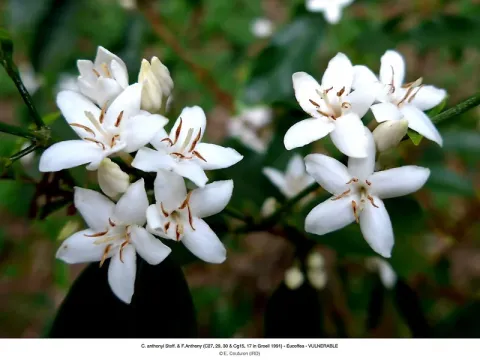
Anthony coffee
Coffea anthonyi
Anthony coffee (Coffea anthonyi) is a member of the Rubiaceae family. This botanical species is native to the forests of the Central African Republic and represents a highly specific lineage within the genus Coffea.
What the section contains
Anthony coffee
A key biological feature of this species is its self-compatibility, which allows the plant to pollinate itself. This trait makes it distinct from most other wild coffee species that rely heavily on cross-pollination to set fruit effectively.
The plant requires shaded tropical conditions to thrive. In a controlled or agricultural setting, it demands high humidity and temperatures between 20°C and 25°C. Excessive heat or direct sunlight can cause significant stress to the foliage and impact growth cycles.
Regarding soil requirements, Coffea anthonyi prefers acidic, nutrient-dense substrates with high organic content. Proper drainage is non-negotiable, as the roots are highly susceptible to rot when exposed to waterlogged conditions.
The economic potential of this species lies largely in its role as a genetic resource for coffee breeders. Its genetic diversity is viewed as a vital tool for improving the resilience and quality of commercially available Arabica cultivars.
In its native environment, the species faces significant threats from habitat loss due to deforestation, which limits the available gene pool for the wild population.
Agricultural pests, most notably the coffee berry borer (Hypothenemus hampei), pose a constant threat to the harvest by tunneling into the coffee cherries and destroying the seeds.
Fungal diseases such as coffee leaf rust (Hemileia vastatrix) are major threats to the plant's productivity, often leading to rapid defoliation and a decline in overall tree health.
Root-knot nematodes can also be a significant issue, particularly in soils that haven't been properly prepared, leading to reduced vigor and stunted development of the trees.
Proactive management, including careful environmental monitoring and the implementation of biodiversity-friendly farming practices, is essential to mitigate these risks and maintain a healthy crop.