
Callery and birchleaf pear hybrid rootstock
Pyrus calleryana x P. betulifolia
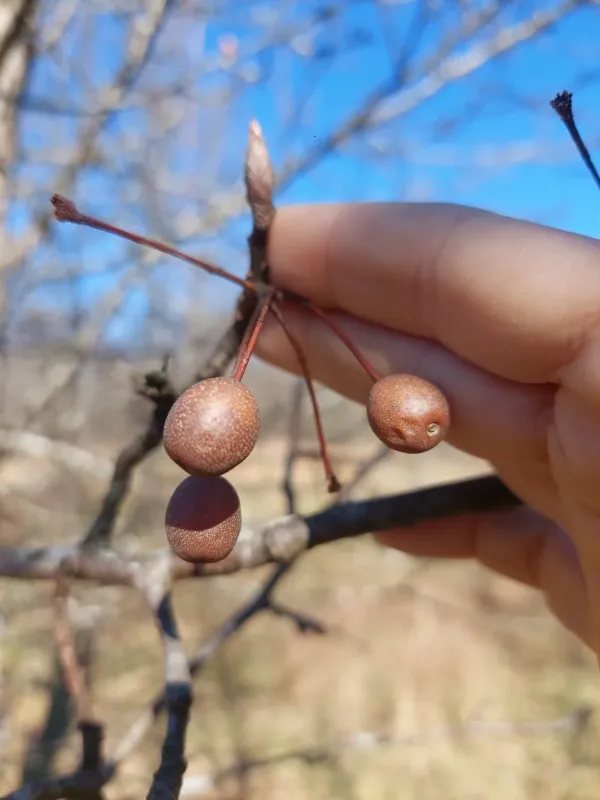
Description
Growing requirements
This hybrid rootstock belongs to the Rosaceae family and is a result of breeding wild Asian pear species. Its biological significance lies in combining the high drought tolerance of the Callery pear with the exceptional adaptability of the birchleaf pear to challenging soil conditions.
The plant demonstrates excellent compatibility with most modern commercial pear varieties. It develops a vigorous root system capable of penetrating deep soil layers, which makes trees on this rootstock resilient to seasonal water deficits.
A primary requirement for cultivation is the absence of waterlogging and high water tables. This rootstock prefers well-drained loamy or sandy loam soils with a neutral to slightly acidic pH range.
In regions with hot climates, this rootstock outperforms traditional forest pear seedlings. It possesses high tolerance to elevated summer temperatures and intense solar radiation while maintaining the productivity of the scion canopy.
Agronomic practices require timely pruning of the rootstock in the nursery to form a straight stem. It should be noted that this hybrid is not dwarfing, so appropriate planting schemes must be used in high-density orchards to account for its vigorous growth habit.
Main diseases and pests
The most significant agronomic advantage of this rootstock is its high genetic resistance to fire blight (Erwinia amylovora), which poses a severe threat to European pear varieties.
Moderate tolerance to Phytophthora root rot is also observed, which distinguishes it favorably from many other clonal rootstocks that are sensitive to excess moisture.
The main pests that may affect young seedlings in the nursery include aphids and leafrollers. Regular monitoring of foliage condition allows for the management of pest populations at early stages.
Iron levels in the soil must be monitored, as the rootstock may exhibit signs of chlorosis in highly alkaline soils. Prevention involves the application of chelated micronutrients during the spring period.
Overall, the use of this hybrid allows for reduced costs in fungicide protection, making it a promising solution for sustainable and ecologically oriented commercial fruit production.