
Brazilwood
Condalia obovata
Description
Growing requirements
Brazilwood, scientifically known as Condalia obovata, is a significant member of the Rhamnaceae family. This shrub is widely recognized for its high adaptability to arid climates and its ability to thrive in challenging soil conditions where other traditional fruit crops would likely fail.
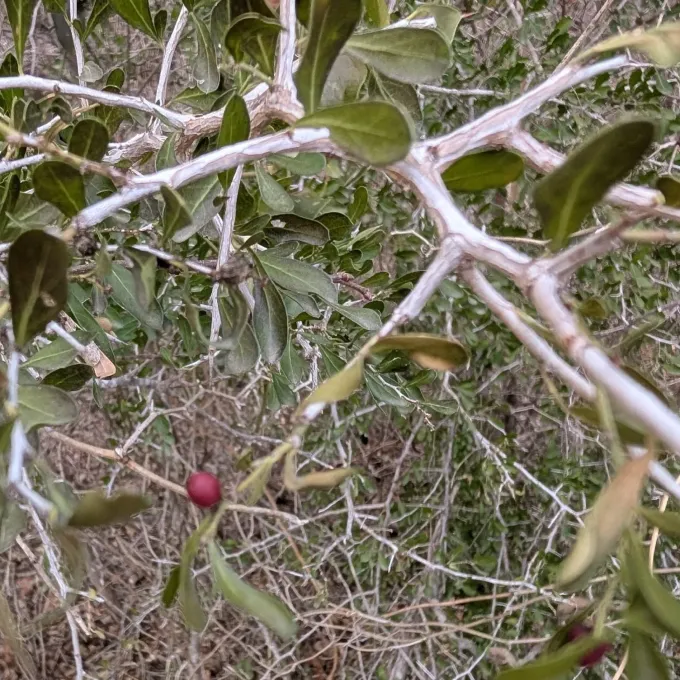
Native primarily to Texas and northern Mexico, this plant is perfectly suited for xeriscaping and sustainable agriculture in hot, dry regions. It typically grows as a dense, thorny shrub or a small tree, offering protection and habitat for local wildlife while serving as an effective windbreak.
The cultural requirements for this plant focus on providing full sunlight exposure and excellent soil drainage. It is highly tolerant of limestone and rocky substrates, which is a key trait that simplifies soil preparation and management in areas with naturally poor agricultural land.
Regarding agrotechnology, the emphasis should be placed on establishing the root system during the first year of planting. Once the plant has matured, its water requirements drop significantly, making it an ideal candidate for low-maintenance orchards or restoration projects in semi-arid environments.
Beyond its ecological value, the plant is valued for its small, dark, and edible fruits. These berries are often gathered for local consumption, as they have a distinct flavor and can be processed into jellies or preserves, providing an additional source of income for small-scale landholders.
Main diseases and pests
This shrub species possesses a robust natural defense system against many common plant diseases, largely due to its evolution in harsh, low-moisture environments. However, growers should be vigilant against root rot, which may occur if the soil remains waterlogged for extended periods.
Typical pests affecting this species include scale insects and mites during peak summer temperatures. Integrated pest management strategies, focusing on biological controls and regular monitoring, are usually sufficient to maintain the health of the plants without the need for intensive chemical interventions.