
Condalia spathulata
Condalia spathulata
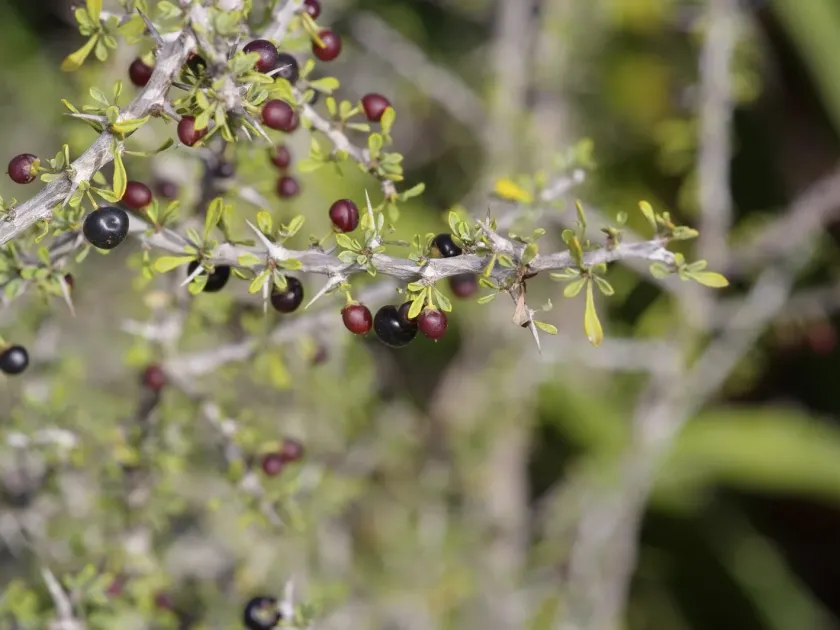
Description
Growing requirements
Condalia spathulata is a perennial shrub belonging to the Rhamnaceae family. This species is well-known for its extreme resilience and ability to thrive in harsh, arid desert environments.
The plant originates from the southwestern United States and northern Mexico. It typically grows in rocky, calcareous, and gravelly soils where water retention is low and heat levels are high.
Botanically, it is classified as a thorny, much-branched shrub. The leaves are small and spatulate, an adaptation that helps the plant conserve water and survive in high-temperature conditions.
To cultivate Condalia spathulata effectively, one must ensure a well-draining soil medium. The plant is extremely drought-tolerant once established and does not require frequent irrigation or fertilizers.
In terms of хозяйственного (economic) use, the plant is widely utilized in xeriscaping and sustainable landscaping. Its dense, thorny nature makes it an excellent choice for natural security barriers.
Main diseases and pests
Common pests associated with this species include scale insects and spider mites, particularly when the plant is stressed by prolonged periods of extreme heat or lack of airflow.
The primary pathological threat is root rot, which occurs if the soil remains waterlogged for extended periods, preventing the roots from breathing.
Fungal infections on leaves can occur during seasons of uncharacteristically high humidity, though this is rare in its native habitat.
Effective management involves maintaining good spacing between individual shrubs to ensure adequate sunlight and ventilation throughout the canopy.
Integrated pest management strategies focusing on early detection are recommended to maintain the health and vigor of the shrubs in ornamental settings.