
Condalia hookeri
Condalia hookeri
Description
Growing requirements
Condalia hookeri, commonly known as brasil or blue wood, is a resilient shrub or small tree belonging to the Rhamnaceae family. It is native to the arid regions of North America, particularly abundant in Texas and northern Mexico.
The plant is highly adapted to extreme temperature fluctuations and long periods of drought. In its natural environment, it thrives in rocky, calcareous, or well-drained soils, often forming part of the native scrubland communities.
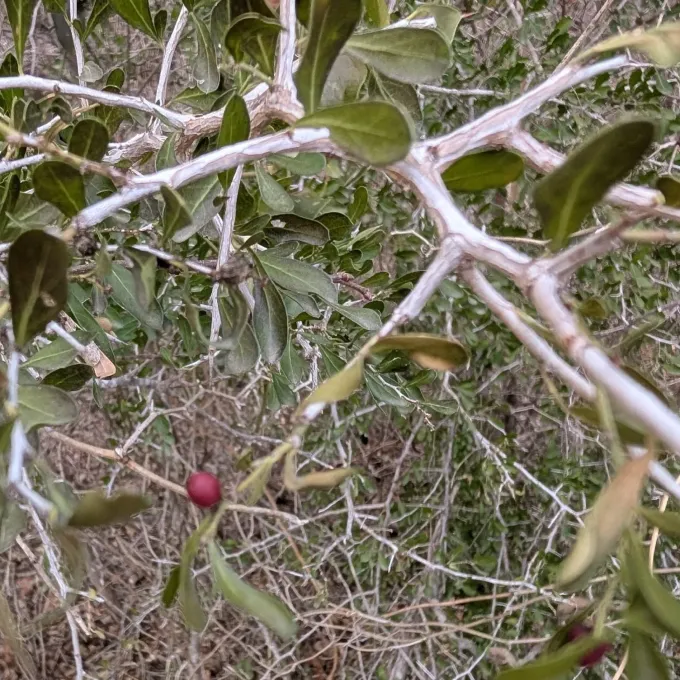
Botanically, it typically reaches heights of 2 to 5 meters. Its dense structure is characterized by rigid, thorny branches which provide protection against herbivores. The foliage consists of leathery, elliptic leaves that are well-suited to reducing water loss through transpiration.
Condalia hookeri requires full sun exposure to maintain its vigor and fruit production. It does not perform well in shaded or damp locations, where it becomes susceptible to fungal diseases and lacks the energy to thrive.
Regarding soil, the species is not overly demanding, provided that drainage is excellent. It is considered a low-maintenance plant suitable for xeriscaping, requiring very little human intervention once the root system is established.
Yield
The fruits of Condalia hookeri are small, spherical drupes that transition from bright red to a deep blue-black when fully ripe. They possess a mildly sweet flavor and are traditionally used to make jams, jellies, and refreshing beverages.
While not a major commercial crop, the berries serve as a significant wild food resource. They are high in pigments and natural sugars, making them a valuable component of the diet in the regions where they naturally occur.
The yield potential per plant is contingent upon moisture availability during the flowering phase. Although highly drought-tolerant, supplemental irrigation during the peak growing season can significantly increase the size and quality of the berry harvest.
Beyond its edible fruits, the plant serves as a functional landscape feature. Its thorny nature makes it an excellent choice for impenetrable hedge screens that prevent soil erosion and offer nesting sites for various bird species.
Harvesting is typically performed by hand due to the uneven ripening of the fruits. Growers usually monitor the bush daily during the peak ripening season to gather the berries at the peak of their nutritional quality.
Main diseases and pests
The primary threat to the health of Condalia hookeri is poor soil drainage. Waterlogged roots lead to rapid decay and are the most frequent cause of plant mortality when moved into managed garden environments.
While the plant is naturally resistant to many pests due to its tough, tannin-rich foliage, it can be impacted by scale insects or aphids during unusually humid spells. Maintaining proper spacing is the best cultural practice to prevent such outbreaks.
Fungal issues, such as root rot or leaf spots, may emerge if the plant is forced to grow in a climate that is constantly moist. Proper air circulation and positioning the shrub in a sunny, breezy area effectively mitigate these risks.
Young shrubs are susceptible to freezing temperatures. In regions where temperatures drop significantly below zero, it is advisable to protect the root crown with mulch and wrap the primary stems during the winter months.
Maintaining the structural integrity of the plant through selective pruning is recommended. Removing dead wood helps the plant focus its resources on fruiting branches, which improves overall harvest quality and plant longevity.