
Anchor plant
Colletia paradoxa
Description
Growing requirements
Colletia paradoxa, commonly known as the Anchor plant, belongs to the Rhamnaceae family. This shrub is native to the South American regions of Brazil, Uruguay, and Argentina, characterized by its ability to thrive in harsh, open environmental conditions.
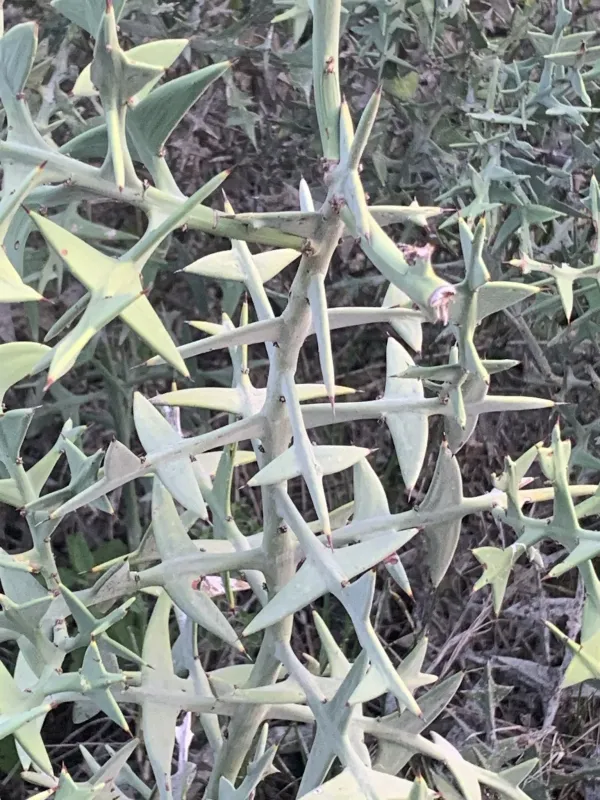
The plant is botanically remarkable for its flattened, triangular spines that act as leaves. This architectural growth form makes it a popular choice for ornamental use, particularly in xeriscaping or exotic plant collections.
The Anchor plant requires well-draining, slightly acidic soil to thrive. Proper drainage is the most critical aspect of its soil management, as the roots are highly susceptible to rot if they sit in saturated soil for extended periods.
Sunlight is vital for this species; it requires full, direct sun to maintain its dense, structural appearance. In shaded conditions, the plant may become leggy and lose its unique, compact, and thorny character.
Regarding climate, this species is only hardy in zones with mild winters. In areas prone to frost, it is best grown as a potted specimen and brought indoors or into a greenhouse to avoid damage from low temperatures.
Main diseases and pests
The primary pests affecting Colletia paradoxa are spider mites and scale insects, which often thrive in indoor environments where air circulation is poor and humidity levels are low.
Root rot remains the most significant threat to the health of the Anchor plant, typically resulting from overwatering or inadequate soil drainage during the dormant winter phase.
Preventive maintenance involves strictly monitoring soil moisture and ensuring proper airflow around the plant's branches to prevent the buildup of fungal spores.
Should an infestation occur, systemic pesticides or horticultural oils are recommended, provided they are applied during the cooler times of the day to avoid leaf and stem burn.
Regular monitoring of the base of the plant is necessary to identify early signs of rot or decay, which can often be managed by reducing water frequency and improving soil aeration.