
Colletia armata
Colletia armata
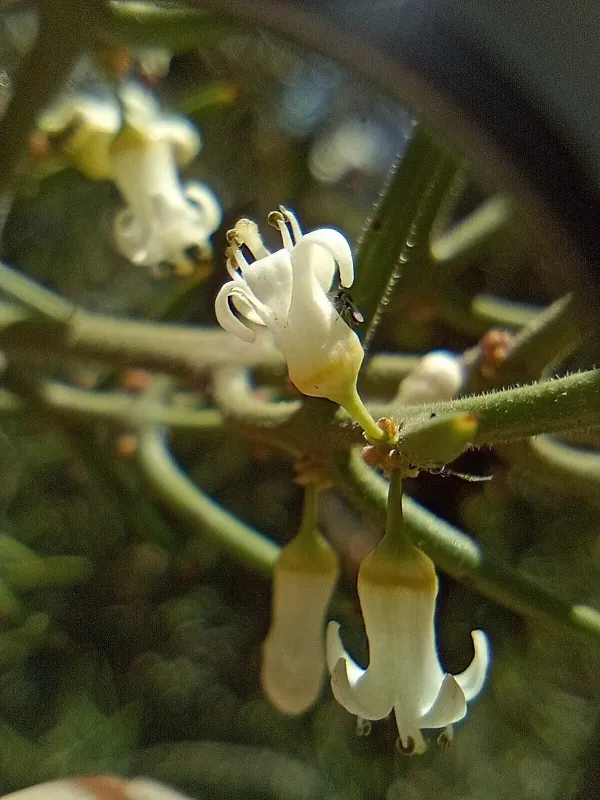
Description
Sowing dates
Propagation of Colletia armata via seeds requires a period of cold stratification to break dormancy. Seeds should be sown in early spring in a well-draining, gritty soil mix to mimic their natural habitat and prevent rot.
The seeds require light to germinate; therefore, they should be barely covered with a fine layer of substrate. Consistent moisture is essential during the germination phase, but the surface must never be waterlogged.
Vegetative propagation via semi-hardwood cuttings is the preferred method for maintaining genetic uniformity. Cuttings should be taken in late summer and placed in a rooting medium with high humidity.
Rooting success depends heavily on maintaining stable temperatures and avoiding direct harsh sunlight on the tender shoots. Once the root system is established, the seedlings can be gradually acclimated to outside conditions.
Transplanting should be done with extreme care to avoid damaging the brittle roots. Using pots with excellent drainage is crucial for the early stages of the plant's development to ensure long-term health.
Growing requirements
Colletia armata belongs to the Rhamnaceae family and is recognized for its highly specialized, flattened, thorn-like branches. These structures act as the primary photosynthetic organs, allowing the plant to thrive in harsh, sunny environments.
This species requires full sun exposure to maintain its compact habit and encourage flowering. Providing less than six hours of direct sunlight will lead to spindly growth and a significant reduction in the plant's overall vitality.
Soil requirements are relatively specific: the plant demands a neutral to slightly acidic, sandy, or loamy soil with exceptional drainage. It is highly intolerant of heavy clays or standing water which quickly lead to root decay.
Watering should be approached with caution, following a soak-and-dry method. During the summer, moderate water is needed, but in winter, the plant enters a semi-dormant state and requires very minimal irrigation.
- Full sun exposure is mandatory for healthy development.
- Exceptional soil drainage is the single most important factor.
- Low nitrogen fertilizers are best to prevent overly succulent growth.
- Protection from deep winter frosts is necessary in temperate zones.
Main diseases and pests
Root rot is the most serious threat to Colletia armata, usually caused by overwatering or poorly aerated soil conditions. Once the root system begins to decay, the damage is often irreversible and leads to total plant loss.
Scale insects are common pests that hide between the dense thorns, making them difficult to detect. These pests weaken the plant by sucking sap and may lead to the formation of sooty mold on the surface of the branches.
Spider mites can be problematic in dry, indoor environments, causing discoloration of the green stems. Regular inspection and maintaining appropriate humidity levels are vital strategies to manage these micro-pests.
Chemical control must be implemented carefully, as the plant's complex structure makes thorough coverage challenging. Applying systematic treatments can help manage populations before they cause significant structural damage.
Sanitation practices, such as the removal of dead or diseased branches, are essential to maintain airflow. Cleanliness in the growing area prevents the buildup of pathogens and helps the plant remain resilient against minor stresses.