
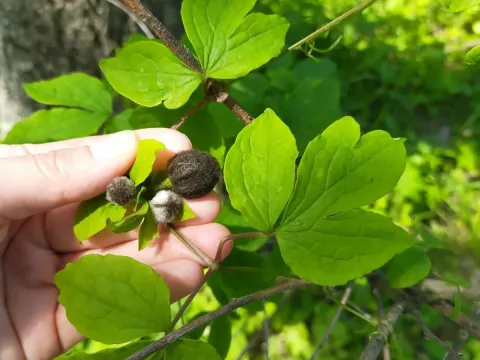
Brown clematis
Clematis fusca
Brown clematis (Clematis fusca) is a perennial woody vine belonging to the Ranunculaceae family. This species is recognized for its unique, bell-shaped nodding flowers that possess a distinct dark brownish-purple hue, making it an exquisite choice for specialized gardening and botanical collections.
What the section contains
Brown clematis
The native distribution of this species spans across the Russian Far East, Eastern Siberia, Japan, and parts of China. Within its natural habitat, it thrives in forest margins and riverbank environments, indicating a preference for stable moisture conditions and rich organic matter in the soil substrate.
This clematis species is noted for its high frost resistance, allowing it to withstand harsh winters typical of its native range. For optimal growth, it requires a sheltered site with partial shade, protecting the delicate foliage from excessive heat and direct mid-day solar exposure.
Cultivation success relies heavily on soil conditions: a well-draining, nutrient-rich, and slightly alkaline soil is preferred. Growers must ensure the planting site is elevated or adequately drained to prevent waterlogging, as the root system of Clematis fusca is sensitive to anoxia and subsequent decay.
General agronomic care involves seasonal fertilization with balanced fertilizers in early spring and adequate mulching to protect roots from temperature fluctuations. Pruning should be handled carefully, focusing on the removal of damaged stems during dormancy to maintain the plant's shape and vigor for the following growth cycle.
The primary pathological threats include fungal infections such as powdery mildew and wilting (vascular wilt), particularly in humid environments with poor air circulation. Sanitation practices, including the removal of dead foliage, are essential for maintaining plant health.
Insect pests, primarily aphids and spider mites, are common nuisances that target the young, tender growth of the vines. Integrated pest management strategies, utilizing selective acaricides and insecticides, are recommended to maintain the aesthetic quality of the foliage and flowers.