
Prince's feather
Amaranthus paniculatus
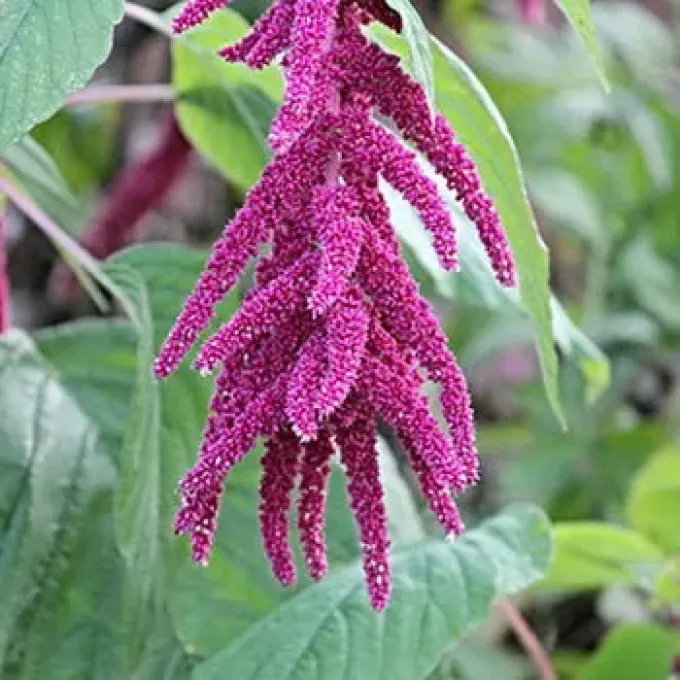
Description
Sowing dates
Sowing of Prince's feather is conducted in warmed soil, once temperatures at a depth of 5-10 cm reach 12-14 degrees Celsius. The optimal timing usually falls within the second or third decade of May, depending on the specific regional climate.
To ensure high-quality germination, it is vital to maintain sufficient moisture in the seedbed. The seeds of this crop are extremely small, so they should be sown at a shallow depth, not exceeding 1-2 centimeters, to facilitate fast and uniform emergence.
The seeding rate largely depends on the sowing method and the intended use of the crop. Using wide rows with spacing of 45-60 cm requires less seed material and promotes the development of individual plants, leading to a higher biomass yield.
Prior to sowing, it is essential to perform high-quality pre-sowing cultivation to eliminate weeds. In the early stages of development, amaranth grows slowly and can be severely impacted by competition with weed vegetation.
The use of precision seeders allows for an even distribution of seeds across the field, which significantly simplifies subsequent crop management and enhances the overall productivity of the field.
Growing requirements
Prince's feather is a heat-loving and light-demanding plant belonging to the Amaranthaceae family. It adapts excellently to long daylight hours and the high temperatures typical of the summer season.
The crop prefers well-structured, aerated soils, such as chernozems or fertile loams. It is important to avoid areas with a high water table, as the plant does not tolerate waterlogging or soil acidification well.
Optimal growth requires a sufficient supply of nutrients, particularly nitrogen and phosphorus during the first half of the growing season. Applying fertilizers significantly boosts biomass output and seed productivity.
Amaranth possesses high drought tolerance due to its unique photosynthetic pathway, although irrigation during critical development stages can more than double the vegetative mass yield.
The plant thrives in various climatic zones, although a long period of warm weather without early autumn frosts is necessary to produce high-quality seed material.
Yield
Biomass yields of Prince's feather can reach 40-60 tons per hectare under favorable conditions. These results depend heavily on agronomic standards, moisture availability, and mineral fertilizer application.
The seed productivity of the crop is also quite high. With proper management, it is possible to harvest between 1.5 and 3 tons of high-quality seeds per hectare, which are valued for their high protein content and essential amino acid profile.
Plant density has a significant impact on biomass accumulation. Optimal sowing density allows for efficient utilization of solar energy and soil resources, ensuring maximum yield potential is reached.
Economic use of Prince's feather includes the production of silage, haylage, and leaf meal. Due to high protein levels, amaranth-based feeds significantly improve livestock productivity.
Yield stability depends on adherence to crop rotation practices. Amaranth serves as an excellent predecessor for most cereal crops, helping to improve soil structure and reduce weed infestation in the following seasons.
Main diseases and pests
The main pests of amaranth include weevils and cutworm caterpillars, which can damage young sprouts and leaves during the initial vegetative period. Early diagnosis allows for effective pest management strategies.
Common diseases include root rot and leaf spots, often resulting from poor agronomic practices, excessive moisture, or overly dense plantings. Following proper crop rotation is the best preventive measure against these issues.
Crop protection involves integrated methods, including the use of certified healthy seeds and timely inter-row cultivation to limit the spread of pathogens and pests.
In high-humidity conditions, mold fungi may develop on the inflorescences, negatively affecting seed quality. Choosing the correct harvest timing minimizes the risk of yield losses due to fungal infections.
The application of chemical protection agents must be strictly regulated, as many amaranth varieties are used for food or feed, requiring strict adherence to ecological safety standards.
Harvesting
Harvesting amaranth for biomass is carried out during the flowering stage, when the plant has accumulated its peak nutrient levels. At this stage, the stems remain tender and succulent, which is crucial for producing high-quality silage.
For seed harvesting, the process begins upon reaching full maturity, when the panicles take on their characteristic color and the seeds become hard. It is important to avoid delays to prevent shattering, as the seeds are highly fragile when fully ripe.
The use of specialized machinery, such as grain combines with adjusted drum and screen settings, allows for minimized harvesting losses and ensures the purity of the harvested crop.
After harvest, seeds require mandatory drying to reach market-standard moisture levels. This prevents the heating of the grain during storage and preserves high germination rates for future planting.
Crop residues remaining after seed harvest can be utilized as a valuable organic fertilizer or as a forage additive, making amaranth production a nearly waste-free agricultural process.