
Didymodon insulanus
Didymodon insulanus
Description
Growing requirements
Didymodon insulanus is a perennial moss species belonging to the Pottiaceae family. While not an agricultural crop in the standard sense, it serves as an essential component of the ground vegetation layer in many temperate ecosystems.
The distribution of this species covers a wide range across the Northern Hemisphere, predominantly in Europe. It thrives in open, sun-exposed areas and is known for colonizing disturbed soils, including rocky slopes and riverbanks.
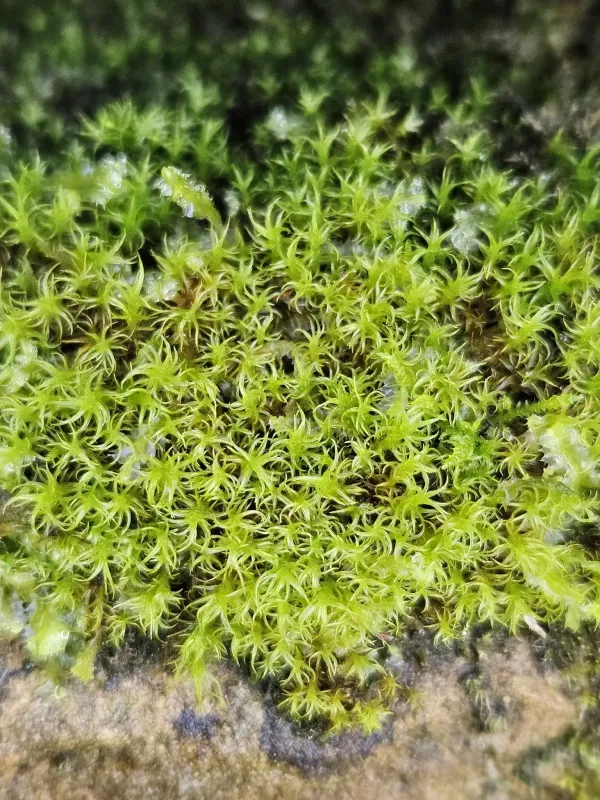
Morphologically, this moss forms dense cushions that vary from yellowish-green to olive in color. Its leaves are lanceolate, exhibiting a characteristic curling pattern when dry, which is a physiological adaptation to manage water loss effectively.
Regarding soil requirements, Didymodon insulanus prefers neutral to slightly alkaline substrates. It is commonly associated with limestone outcrops and well-drained, mineral-rich soils, where it can establish stable, long-lasting colonies.
Climatically, it is a hardy species capable of withstanding fluctuations in moisture. As a wild-growing bryophyte, it does not require conventional agronomic practices, but its presence is often indicative of soil stability and specific nutrient availability.
Main diseases and pests
The primary threats to Didymodon insulanus include intensive land-use practices and chemical contamination. The use of herbicides and fungicides in adjacent fields can lead to significant declines in local moss populations.
Soil acidification remains a critical environmental pressure that restricts the moss's growth. Changes in local hydrology and excessive sedimentation can also bury or smother existing colonies, preventing spore germination.
Competition from invasive vascular plants and faster-growing bryophytes often poses a threat in environments undergoing succession. As shade levels increase due to woody plant growth, the light-demanding Didymodon struggles to survive.
Mechanical damage from agricultural machinery or trampling in recreational areas disrupts the fragile cushion structures. Such disturbances can lead to the complete fragmentation and eventual loss of the colony.
Conservation efforts for this moss focus on maintaining the integrity of natural habitats and preventing the over-saturation of surrounding soils with fertilizers that alter the pH balance of the micro-habitat.