
Wavy-leaved beard-moss
Didymodon sinuosus
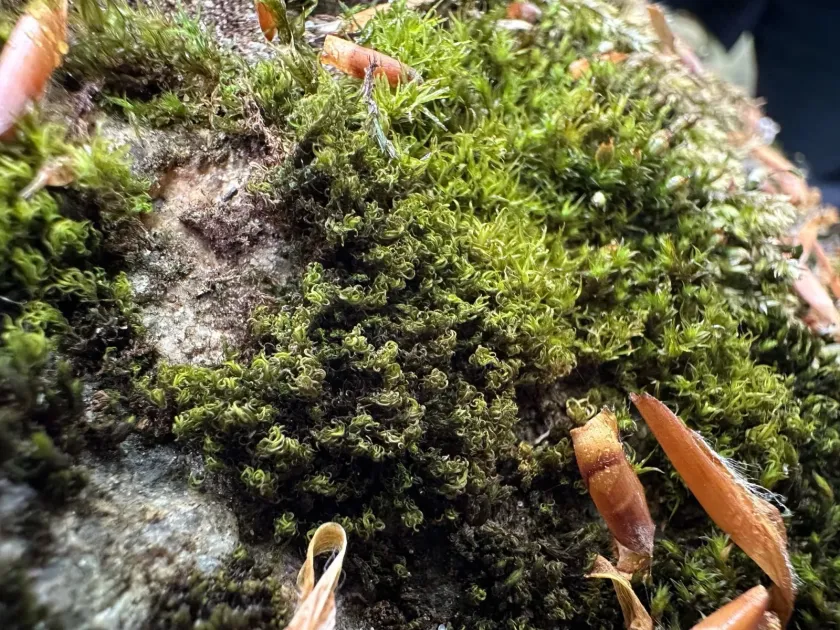
Description
Growing requirements
Didymodon sinuosus, commonly known as the wavy-leaved beard-moss, is a perennial acrocarpous moss belonging to the family Pottiaceae. While it holds no traditional agricultural value, it is a significant species in bryological studies and ecological monitoring of urban and semi-natural habitats.
This species is typically found growing on calcareous substrates, including aged mortar, limestone walls, and rocky crevices. It thrives in shaded to semi-shaded conditions, exhibiting a remarkable ability to colonize man-made structures that provide the necessary mineral content and moisture retention.
The botanical structure consists of small, dense olive-green to brownish tufts. A diagnostic feature is the sinuous leaf margin, from which the name of the species is derived. The costa is robust and often extends into a sharp point at the leaf apex, assisting in moisture regulation.
Reproduction is largely vegetative through fragmentation and the production of specialized gemmae. This reproductive strategy allows the species to maintain stable populations in environments where sexual reproduction, mediated by the development of sporophytes, is infrequent due to microclimatic constraints.
The geographical distribution spans across Europe and parts of North America and Asia. As a calcicole plant, it prefers nutrient-rich substrates, making it an excellent indicator of soil or masonry composition in its respective ecological niches.
Main diseases and pests
The primary threat to the stability of Didymodon sinuosus populations is the destruction of its habitat, particularly the renovation of old masonry, brick walls, and concrete structures. Such activities remove the essential substrate required for the moss to anchor and thrive.
There are no significant agricultural pests associated with this species. However, extreme desiccation resulting from climate shifts or extended periods of drought can cause colony die-back, as the moss relies heavily on its capacity to absorb ambient moisture from fog and rain.
Environmental pollutants, particularly acidic runoff from industrial processes or the application of biocides on building surfaces, pose a direct threat to the vitality of the moss. Chemical stress can inhibit growth and prevent the formation of new gemmae, leading to gradual population decline.
Competition from more vigorous bryophytes or creeping vascular plants can displace Didymodon sinuosus if the environmental conditions shift toward higher nutrient availability and constant humidity. It is best adapted to stable, slow-changing, nutrient-rich, but low-competition niches.
Anthropogenic disturbances, including mechanical cleaning of surfaces and urbanization, remain the most significant limiting factor. The slow growth rate of the species means that once a colony is removed from a wall or rock surface, the recovery process is prolonged and often unsuccessful.