
Didymodon icmadophilus
Didymodon icmadophilus
Description
Growing requirements
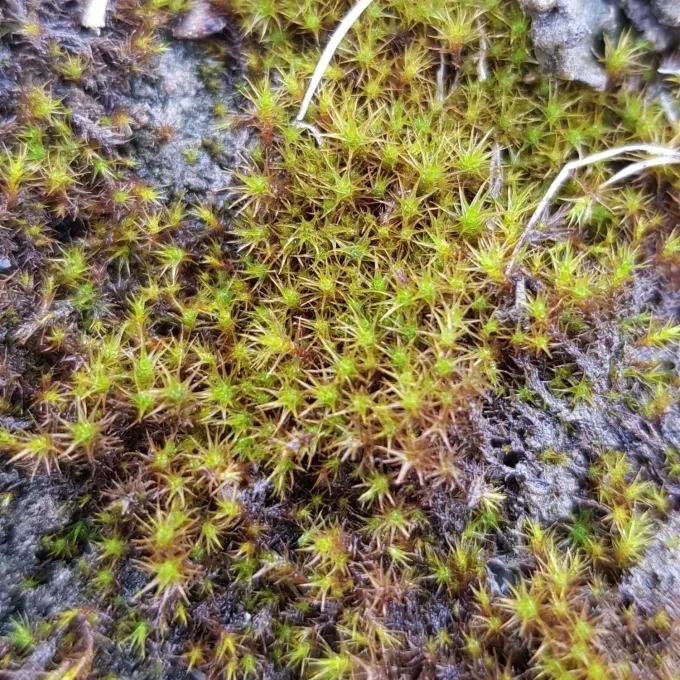
Didymodon icmadophilus is a species of moss belonging to the family Pottiaceae. It is important to note that this organism is not a crop in the agricultural sense, but a specialized bryophyte occurring in specific natural habitats throughout the Northern Hemisphere.
The distribution of this species is associated with mountainous regions and areas with calcareous soils. It is well-adapted to survive in harsh environmental conditions, often colonizing rocky substrates where mineral content is high and vascular plant competition is low.
Botanically, the plant forms dense, yellow-green to brownish mats. Its stem structure is typically erect, and its leaves display unique physiological adaptations for moisture retention and protection against desiccation during arid spells, which are characteristic of its high-altitude environment.
Regarding ecological requirements, this species acts as a calcicole, meaning it thrives in neutral to alkaline soil conditions rich in calcium. It demands high levels of surface humidity and avoids the acidic conditions found in peatlands or coniferous forest floors.
In terms of human use, Didymodon icmadophilus serves primarily as a subject of botanical study. It is valuable in ecological monitoring and biodiversity assessment, providing researchers with insights into the health of calcicolous habitats and the impact of climate shifts on high-altitude bryophyte communities.