
Pleurochaete squarrosa
Pleurochaete squarrosa
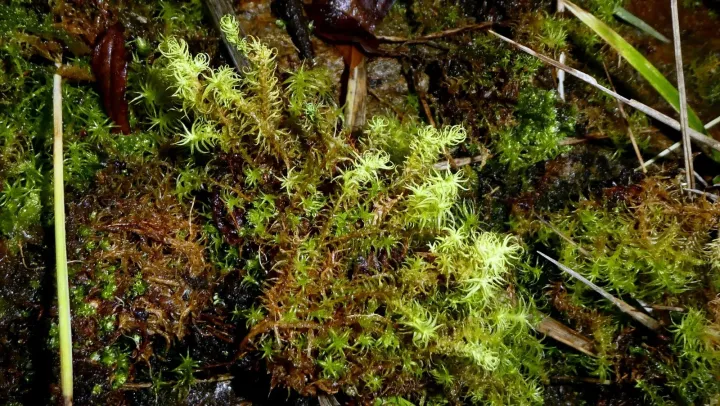
Description
Growing requirements
Pleurochaete squarrosa is a perennial moss belonging to the family Pottiaceae. It is a wild-growing species found in various temperate zones, recognized for its ability to thrive in specific limestone-rich environments where other vegetation often struggles.
The habitat of this moss typically includes calcareous grasslands, rock crevices, and open, dry slopes. It is highly adapted to well-drained conditions and displays remarkable resilience during dry seasons, which is a characteristic trait of many species within the Pottiaceae family.
Botanically, the plant is identified by its distinct, squarrose leaves that curve backward, giving the moss a ruffled appearance. These leaves are densely arranged along the stem, forming mats that play a functional role in preventing soil erosion in fragile mountain or coastal ecosystems.
Regarding environmental requirements, Pleurochaete squarrosa necessitates alkaline or neutral soils with a sufficient calcium content. It is sensitive to environmental degradation, particularly to high levels of chemical pollution, which limits its distribution in heavily industrialized agricultural areas.
While not a conventional crop, this species is valuable for environmental monitoring and ecological restoration programs. Its presence often indicates a high level of habitat stability and specific soil mineral composition essential for local biodiversity conservation.