
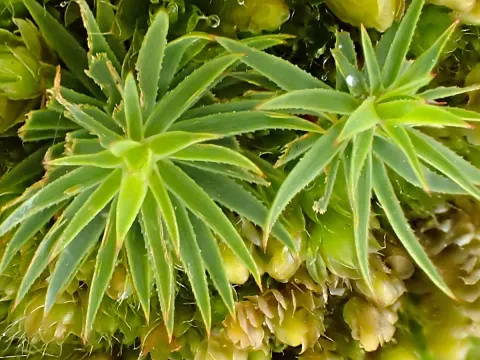
Pogonatum urnigerum
Pogonatum urnigerum
Pogonatum urnigerum is a perennial moss species belonging to the Polytrichaceae family. While not a conventional agricultural crop, it serves critical ecological functions and is increasingly utilized in specialized horticultural practices, including terrarium design and erosion control.
What the section contains
Pogonatum urnigerum
Native to temperate and subarctic regions of the Northern Hemisphere, this plant naturally colonizes disturbed, acidic, and nutrient-poor sites. It is frequently found on clay soils, along forest tracks, and in stony areas where it acts as a pioneer species in successional processes.
Botanically, it features upright, rigid stems covered with dark green leaves that exhibit significant physiological adaptations to handle variable moisture levels. The root-like rhizoids anchor the plant firmly, making it exceptionally effective at stabilizing loose, bare soil surfaces.
Cultivation requires specific environmental parameters: high atmospheric humidity and cool, stable temperatures. It is imperative to avoid waterlogging the roots, as this can trigger rot; however, the surface must remain constantly moist for the moss to maintain its aesthetic and physiological health.
The primary economic and practical utility lies in its use for environmental restoration and professional landscaping. It is highly valued for its ability to filter airborne particles and create sustainable micro-environments in urban landscaping projects that require low-maintenance greenery.
Environmental stress is the primary threat to colony health. Rapid dehydration, often caused by improper indoor climate control, leads to dormancy or permanent tissue damage, significantly reducing the visual appeal and biological functionality of the moss layer.
In terms of biotic threats, fungal pathogens pose the greatest risk, particularly when stagnant air conditions prevail. These infections lead to localized necrosis. Additionally, insect pests such as fungus gnats may interfere with early-stage growth by feeding on the delicate rhizoidal mats.