
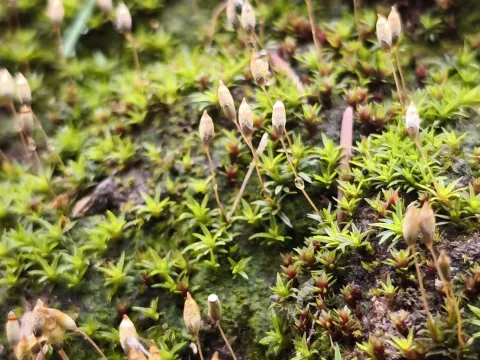
Aloe-leaved haircap moss
Pogonatum aloides
Pogonatum aloides is a species of moss belonging to the family Polytrichaceae. It is a perennial plant typically found in damp, shaded environments with acidic soil profiles.
What the section contains
Aloe-leaved haircap moss
This moss prefers to inhabit clay or loamy substrates, often colonizing exposed surfaces such as forest trail banks, damp ravines, and the sides of water-saturated ditches.
The plant demonstrates significant tolerance for low-light conditions, making it a suitable inhabitant for the understory layer where higher vascular plants cannot dominate.
Consistent soil moisture is the most critical environmental requirement for its survival, as the plant relies on high humidity levels to maintain its physiological functions.
While it is not grown for agricultural production, it serves an ecological function in stabilizing soil surfaces and preventing erosion in sensitive forest habitats.
Desiccation of the substrate caused by drainage or climate changes poses a primary threat to the survival of Pogonatum aloides colonies in their natural range.
Chemical contamination, including heavy nitrogen loading from fertilizers or industrial pollutants, can significantly inhibit the development of the moss protonema.
Mechanical disruption of the soil surface, whether through animal activity or human foot traffic, can easily destroy the fragile shoots of this bryophyte species.
Competition from more aggressive, fast-growing herbaceous plants can lead to the displacement of Pogonatum aloides from suitable micro-habitats over time.
The species lacks specific agricultural pest threats, yet its sensitivity to atmospheric and soil pollutants makes it an excellent indicator of ecosystem health.