
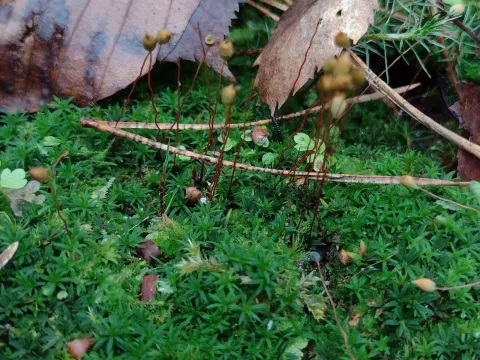
Dwarf hair moss
Pogonatum nanum
Pogonatum nanum, commonly known as dwarf hair moss, belongs to the Polytrichaceae family. While not a conventional agricultural crop, it is a significant species in forest conservation and specialized landscaping, valued for its ability to stabilize damp, bare soil surfaces.
What the section contains
Dwarf hair moss
This moss is native to European temperate climates, typically found in shaded, acidic, and moist habitats. It thrives on clay or loamy soils, particularly along forest tracks, stream banks, and damp slopes where the vegetation cover is sparse or disturbed.
Botanically, it features a simple, upright stem with specialized leaf lamellae on the dorsal side. These structures are adaptations that increase the surface area for photosynthesis and moisture capture, allowing the plant to survive in low-light environments typical of a forest understory.
Cultivation requirements involve maintaining a high humidity level and protection from direct sunlight. The soil must remain consistently moist but not waterlogged, as poor drainage can cause suffocation of the rhizoids, which anchor the plant to the substrate.
In terms of хозяйственного (utilitarian) value, this moss is used in ecological restoration to prevent soil erosion on slopes. Its aesthetic qualities also make it a popular choice for miniature gardens and terrariums that replicate forest environments.
The primary threat to dwarf hair moss is environmental desiccation. Because it lacks a vascular system for water transport, sustained periods of drought lead to rapid browning and death, especially if the relative humidity falls below critical thresholds.
Pathogenic fungi are a major biological threat in greenhouse or humid garden conditions. Stagnant air and over-saturation of the substrate promote mold growth, which can quickly spread through a colony, destroying the moss structure within days.
Invertebrate pests, such as small slugs or certain soil-dwelling larvae, may feed on the tender parts of the gametophyte. While not always fatal, these feeding marks serve as entry points for pathogens, further compromising the health of the plant.
Competition from invasive vascular plants is a persistent issue. When the site becomes too rich in nutrients, grasses or higher plants quickly shade out the moss, depriving it of the specific environmental conditions it needs to remain competitive.
Chemical sensitivity is a hallmark of this species. The application of standard synthetic fertilizers or the accumulation of pollutants through acid rain can disrupt the fragile ionic balance of the substrate, causing irreparable damage to the moss populations.