
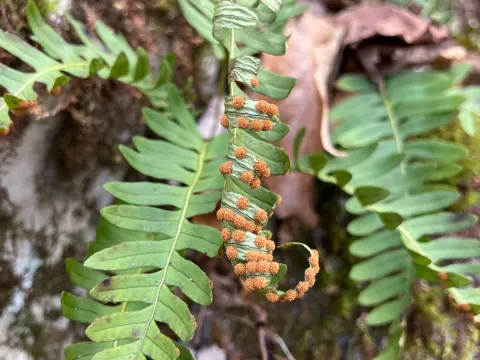
Virginia rock polypody
Polypodium virginianum
Virginia rock polypody (Polypodium virginianum) is a perennial fern belonging to the Polypodiaceae family. It is native to North America, typically found clinging to rock crevices and mossy cliff faces.
What the section contains
Virginia rock polypody
This species is highly shade-tolerant, making it an excellent candidate for woodland gardens. It requires filtered light, as intense direct sun tends to dehydrate its leathery, evergreen fronds.
The ideal substrate for this fern is gritty, acidic, and well-draining. It thrives in organic-rich mixes comprising leaf mold, peat, and stone chips to mimic its native rock-cliff environment.
Regarding climatic needs, it is extremely hardy and capable of surviving temperatures below freezing. However, it requires a steady supply of moisture to maintain its turgidity during the warmer months.
Maintenance involves providing adequate space for the creeping rhizomes to spread. Periodic mulching with pine needles helps maintain the soil acidity levels and protects the rhizomes from rapid temperature fluctuations.
The most significant threat to the Virginia rock polypody is root rot caused by poor soil drainage and waterlogged conditions, which inhibit the oxygen exchange in the roots.
Gastropods, particularly slugs, are frequent pests that graze on the fresh spring growth, potentially disfiguring the plant for the entire season.
In low-humidity environments, spider mites may colonize the undersides of the fronds, causing yellowing and stunted growth if not addressed promptly.
Fungal infections can occur if the foliage is kept constantly wet in stagnant air, making proper ventilation in greenhouse or nursery settings essential.
Integrated pest management, including physical barriers for slugs and regular visual inspections for mites, is recommended for maintaining healthy, vigorous specimens.